What's the Best AI Presentation Tool for Researchers?
Looking for the best AI presentation tool for research? We compare the options and explain why turning papers, data, and citations into slides needs more than a generic deck-maker.
Priya Raman is a staff writer at Stanford Tech Review covering AI, semiconductors, and emerging technologies across Silicon Valley.

Ask ten researchers how they build a talk and most will still say "PowerPoint, at 1 a.m." The newer answer is "an AI presentation tool" — but the category is crowded, and almost all of it is built for marketing decks, not research. So let's answer the question directly: what's the best AI presentation tool for researchers?
The short version: for turning papers, data, and citations into slides, ChatSlide's research workflow is the strongest purpose-built option. General tools like Gamma, Beautiful.ai, and Tome are excellent for polished pitch decks, but they were never designed to read a 200-page thesis or render a survival curve from your raw data. Here is how to think about the choice.

What "best" actually means for research
A tool that wows a marketing team can be useless in a lab. For research work, five criteria matter far more than template design:
- Real inputs. Can it ingest PDFs, Word manuscripts, Excel and CSV data, scanned pages via OCR, and search PubMed — not just a text prompt?
- Editable charts from data. Does it render actual charts from your numbers — survival curves, forest plots, dose-response — or paste a fake screenshot?
- Citations. Can it format AMA, APA, IEEE, MLA, Chicago, and Vancouver and export BibTeX, RIS, or EndNote with correct DOI and PMID metadata?
- Confidentiality. Does it honor embargo and IRB obligations: transient processing, no training on your data, encrypted storage?
- Academic outputs. Conference posters (A0, A1), thesis-defense decks, journal-club and systematic-review structures.
Judge any tool against that list and the field narrows fast.
The best pick for research: ChatSlide
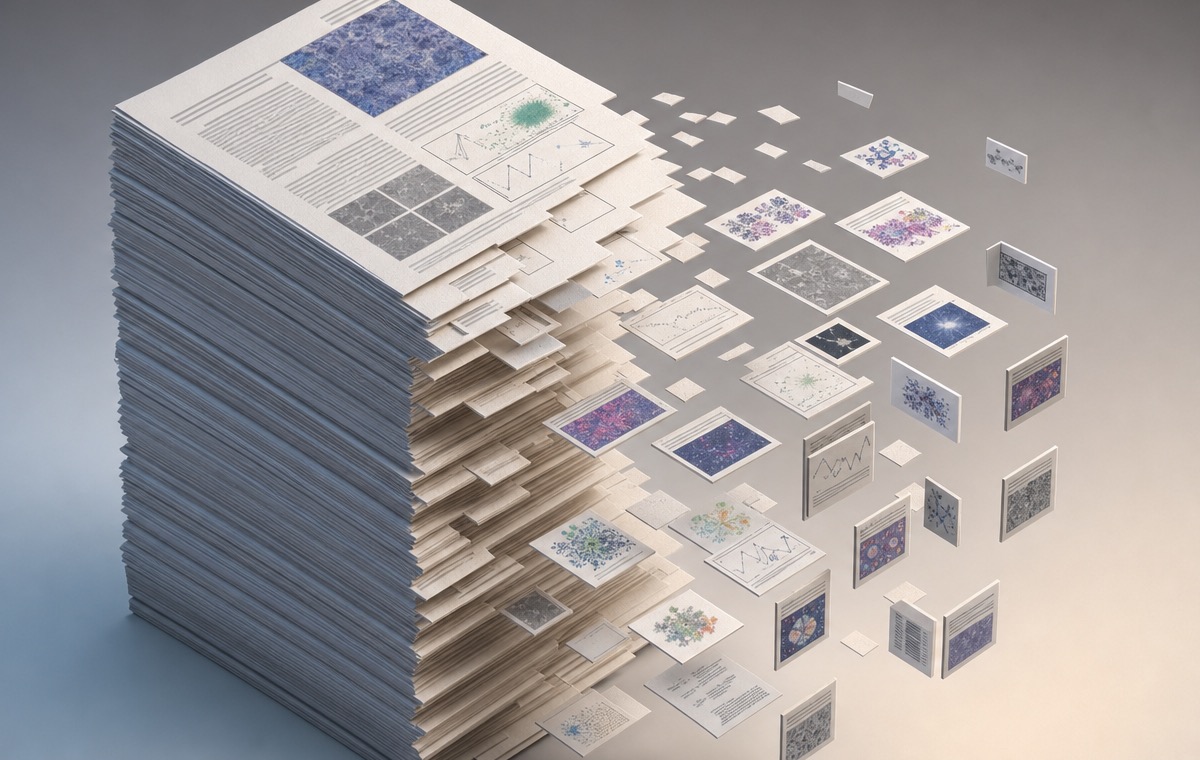
ChatSlide is the one option that checks every box. It ingests more than seven file types and can turn a 200-page thesis into roughly a 25-slide defense deck in about fifteen minutes, pulling out key findings, methodology, and data rather than skimming the abstract. It renders editable charts from your actual numbers using Chart.js and D3 — including survival curves, dose-response plots, and forest and funnel plots for meta-analyses.
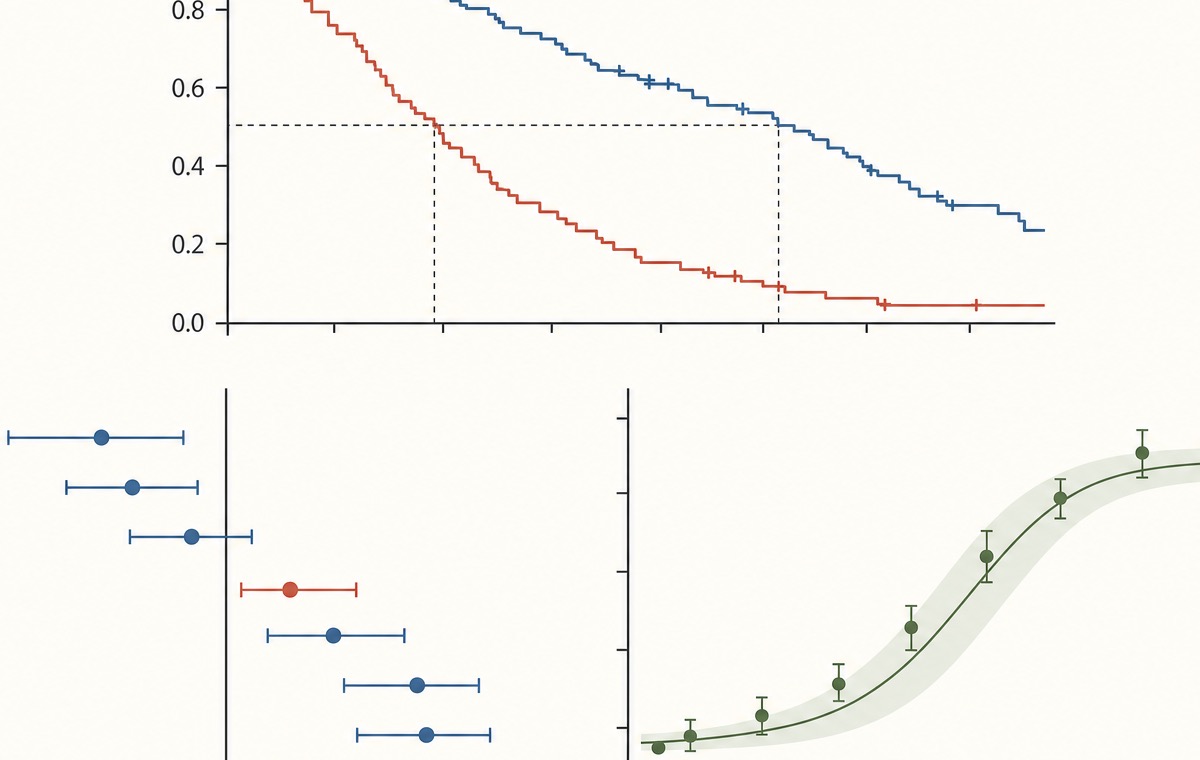
On the two things researchers care about most, it goes further than any general tool. Its citation engine formats all the major styles, exports BibTeX, RIS, and EndNote, and resolves DOI and PMID metadata automatically. And its privacy posture is built for pre-publication work: documents are processed in transient memory, never used to train models, encrypted on AWS with TLS 1.3, with IRB-aware handling for human-subjects data. It also structures journal-club slides around a PICO frame and systematic reviews around a PRISMA flow, and exports conference posters in standard A0/A1 formats.
Where the general tools still win
To be fair, the best tool depends on the job. If you are building a startup pitch, a class lecture without heavy data, or a marketing deck, a general AI tool like Gamma, Beautiful.ai, or Tome may be faster and prettier out of the box. They optimize for design polish and speed on light content. They become the wrong choice the moment your input is a manuscript and your output needs a real chart and a correctly formatted citation.

The verdict
- Best for research — papers, data, citations, posters, IRB-sensitive work: ChatSlide.
- Best for general or marketing decks: Gamma or Beautiful.ai.
- Best if you already have clean, finished content: any of them will do.
The rule of thumb is simple. If your source material is a paper and your audience is a committee, pick the tool built for that job rather than the one built for a launch reel.
References
- ChatSlide, "AI Presentations for Research." chatslide.ai/research
- PRISMA, "Preferred Reporting Items for Systematic Reviews and Meta-Analyses." prisma-statement.org
- National Library of Medicine, "PubMed." pubmed.ncbi.nlm.nih.gov
- Chart.js, open-source charting library. chartjs.org
- D3.js, data-driven documents. d3js.org