Fauci pleads the Fifth: Rand Paul's contempt vote
Fauci invoked the Fifth 111 times before Rand Paul's committee. The pardon argument, the Lois Lerner precedent, how a contempt referral works, and why researchers care.

Elena Marsh covers science policy for Stanford Tech Review, with a focus on federal research funding, biosecurity oversight, and how Washington governs the labs it pays for.
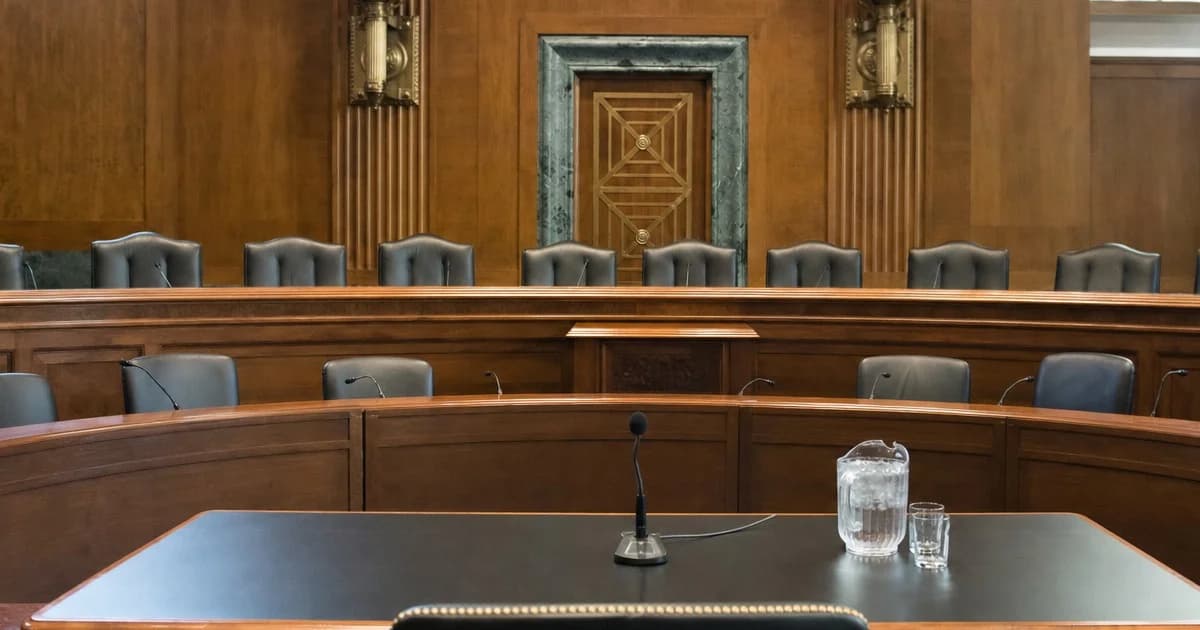
On July 29, 2026, Anthony Fauci sat down at the witness table of the Senate Homeland Security and Governmental Affairs Committee, under subpoena, delivered a short opening statement, and then declined to answer questions 111 times on Fifth Amendment grounds. The committee's chair, Senator Rand Paul of Kentucky, has set a vote for Thursday morning on whether to hold him in contempt of Congress.
Most of the coverage has been about the theater of it, and there was plenty. Paul ruled from the chair that the privilege did not apply and ordered Fauci to answer. He had Capitol Police escort Fauci's attorney, David Schertler, from the room, saying "This testimony is from Anthony Fauci. This is not a game with his lawyers." Fauci, in his opening statement, said the hearing had one purpose: "The only conclusion I can reach is that the sole reason he is calling me before this committee is to get me to say something, anything, that could vindicate his repeated public pledges that I end up, in his words, behind bars." Afterward he called Paul unhinged.
Strip the theater away and what is left is a legal question with consequences for every scientist who takes federal money.
The pardon is the whole argument
In January 2025, on his way out of office, President Biden issued Fauci a preemptive pardon covering conduct up to that date. That pardon is why the hearing happened the way it did, and both sides are using it in opposite directions.
Paul's position is that the pardon removes the risk of prosecution for the underlying conduct, so there is nothing left to incriminate yourself about, so the Fifth Amendment does not apply. He also argued that by giving an opening statement at all, Fauci waived whatever privilege remained.
The first half of that argument has real doctrinal support. In Brown v. Walker (1896), the Supreme Court held that a grant of immunity can displace the privilege: once the testimony can no longer be used to convict you, embarrassment and reputational damage alone do not justify silence. If a pardon functions as immunity, Paul's reading follows.
Fauci's position is that it does not, for two reasons. A pardon covers the past, not the present: anything he says under oath on July 29, 2026 is new testimony, and a perjury or false-statements charge arising from that testimony would be a new crime the pardon does not reach. And unlike a congressional immunity grant, which is a statutory instrument with defined scope that Congress itself confers before testimony, a pardon is an executive act whose boundaries have never been tested against a compelled-testimony question. On that reading, a witness facing a committee whose chair has publicly promised to put him behind bars has exactly the exposure the Fifth Amendment exists to cover.
Across roughly three hours, Fauci invoked the privilege 111 times, or about once every 100 seconds. For scale, the Senate record is Vito Genovese, who managed 150 in 1958.
The Lerner precedent nobody is citing correctly
This has happened before, closely enough that it should be governing everyone's expectations.
In May 2013, IRS official Lois Lerner appeared before the House Oversight Committee under subpoena, read a voluntary opening statement denying wrongdoing, and then invoked the Fifth. Republicans on the committee argued that the opening statement was a waiver, on the theory that you cannot offer your own account of the facts and then refuse cross-examination on it. The committee voted 22-17 that she had waived. She was recalled in March 2014, refused again, and the committee voted 21-12 to recommend contempt, which the full House adopted.
Then nothing happened. In 2015 the Justice Department declined to prosecute, and the stated reason matters: it concluded she had not waived the privilege. The waiver theory, which is precisely Paul's second argument, was tested at the only stage where testing counts and it lost.
That is the pattern in this area generally. Steve Bannon and Peter Navarro were convicted of contempt of Congress in 2022 and 2023 and served four-month sentences, the first such convictions in decades. Eric Holder in 2012, Harriet Miers in 2008, and Lerner in 2014 were all referred and none was charged. The variable that best predicts the outcome is not the strength of the privilege claim. It is whether the party doing the referring and the party running the Justice Department are the same party.
The mechanics, which are less dramatic than they sound
A committee vote is not a prosecution. For a Senate committee, a contempt finding is normally a recommendation that moves to the full chamber, where it faces an ordinary majority vote but also, in practice, a 60-vote cloture threshold that a party-line referral will not clear. Paul's reported plan is to skip that step and send the referral directly to the Justice Department with the committee's legal argument attached, which avoids the filibuster problem and also strips the referral of the institutional weight a chamber vote would give it.
Congress has a second route it almost never uses here: civil enforcement, in which the chamber asks a federal court to order compliance. It is slower and produces no conviction, but it produces the thing that is actually missing from this dispute, which is a judicial ruling on whether a preemptive pardon defeats a Fifth Amendment claim.
So Thursday's vote is best read as the opening move in a fight about the scope of the privilege, not as a step toward a cell.
What was actually being asked
The questions Fauci declined to answer concerned four things: whether US-funded research at the Wuhan Institute of Virology contributed to the origin of COVID-19; whether he misled Congress about what counts as gain-of-function research and whether NIH money supported it; whether NIH involvement in Wuhan was downplayed; and discrepancies Paul says exist between Fauci's contemporaneous diary entries and his public statements at the time.
The underlying record here is more developed than the hearing suggested. Enhanced-pathogen research was subject to a federal funding pause from 2014 to 2017 and then to the HHS P3CO review framework after it. In 2018, NIAID revised the terms of the relevant EcoHealth Alliance award to require immediate notification if experiments produced a virus with enhanced growth past defined benchmarks. A February 2024 HHS Inspector General audit found that NIH and EcoHealth had not effectively monitored the awards and subawards. HHS suspended EcoHealth's funding and moved to debar it in 2024, and in January 2025 formally debarred both the organization and its president, Peter Daszak.
That is the substance underneath the shouting, and note its shape. Every one of those findings is a records question: who funded what, who was told when, what the internal notes say against what the podium said. Records questions are the ordinary business of research oversight, and they are answerable without anyone's testimony at all.
Why a technology publication should care
The precedent under construction here is not really about Fauci. It is that a pardon can be read as stripping the Fifth Amendment protection the pardon was meant to make unnecessary, and that reading travels to every federally funded researcher who is ever subpoenaed.
Consider who is exposed to the same structure over the next decade. NIH grantees running any dual-use biology. National-lab staff on export-controlled work. And, increasingly, the frontier AI labs, which now sit at the same intersection Fauci's institute did: organizations doing work with plausible catastrophic tail risk, funded or backstopped in part by government, subject to reporting requirements written faster than the science moved, and carrying years of internal communications that will read very differently in a hearing room than they did in a Slack channel. The pre-deployment evaluation reports that labs now file with government bodies are exactly the kind of document that becomes a subpoena target after an incident.
The institutional lesson researchers will draw from this hearing is not "be more careful about gain-of-function." It is "be more careful about what you write down." That is the wrong lesson, and it is the one that an oversight process ending in a contempt vote reliably teaches. Oversight that gets records tends to produce better science policy. Oversight that gets a spectacle tends to produce fewer records, worse-documented decisions, and a generation of principal investigators who treat their own lab notebooks as discoverable liabilities.
What to watch
Thursday's vote count. Whether it splits cleanly on party lines or picks up a crossover vote determines whether this arrives at the Justice Department as a partisan artifact or a committee position.
Whether anyone tests the privilege in court. A civil enforcement action would produce a judicial ruling on whether a preemptive pardon defeats a Fifth Amendment claim. That ruling would bind far more than this dispute, and right now no court has issued one.
Whether the diary entries become public. Paul has cited them; they have not been released in full. Documents settle records questions in a way that a hearing room never does.
The underlying question, how a US-funded lab in Wuhan fit into the origin of the pandemic, remains unresolved after six years. Thursday's vote will not resolve it either.