From Dorm Room to Dealmaking: The 19-Year-Old Engineer Reinventing M&A With AI
A self-taught engineer scaled a dorm-room AI consultancy to $20K MRR, raised $220,000 at 19, and is now reinventing M&A due diligence with AI.

When Silicon Valley tells the story of a self-taught founder, it usually tells it in retrospect, polished and inevitable. Daniel Ray Edgar is writing his in real time. At 18 he taught himself to build with AI; by 19 he had a profitable company and a funded startup; at 20 he is the Chief Technology Officer of a company trying to automate the most expensive report in mergers and acquisitions. The shortest distance between a dorm room and a dealmaking desk is usually measured in decades. Daniel is covering it in a couple of years.
Self-taught, the hard way
Daniel enrolled in Honours Computer Science at Queen's University in Canada at 18. Plenty of students arrive at a strong CS program intending to start something; almost none ship a paying product in first year. Daniel did, and the reason is instructive for anyone paying attention to how software gets built now.
He did not wait for the curriculum to make him useful. He taught himself to build with AI, not as a party trick, but as a way to operate like an engineering team of one. He learned to take a real business problem, break it into pieces a model could handle reliably, wire those pieces into systems that ran unattended, and design carefully around the places where the models were unreliable. That last skill is the one most people skip, and it is the one that separates a demo from a product.

Nodebase: a business, not a side project
The product was Nodebase{dofollow}, an AI consultancy aimed at the least glamorous, most reliable kind of demand: businesses losing money to manual operations. Daniel focused on real estate agencies and mortgage brokerages, two industries whose economics hinge on responding to leads fast and which are, almost universally, bad at it. He built systems that captured inquiries the instant they arrived, qualified them automatically, and followed up without anyone having to remember to.
The outcome was not a hackathon trophy; it was revenue. Nodebase grew to $20,000 in monthly recurring revenue, run entirely from a dorm-room desk, with no outside funding. The word that matters is recurring. Anyone can earn a one-time fee. Building something that bills predictably every month, while carrying a full Honours course load, is a different order of discipline, and it taught Daniel to sell, to keep costs under revenue, and to ship on a schedule set by clients rather than by a syllabus.
The decision to leave money on the table
A profitable business at 19 is a comfortable place to stay. Daniel left it. After first year he took a year off to build AI companies full time, on the theory that deploying other people's models for clients was a ceiling and building his own products was not.
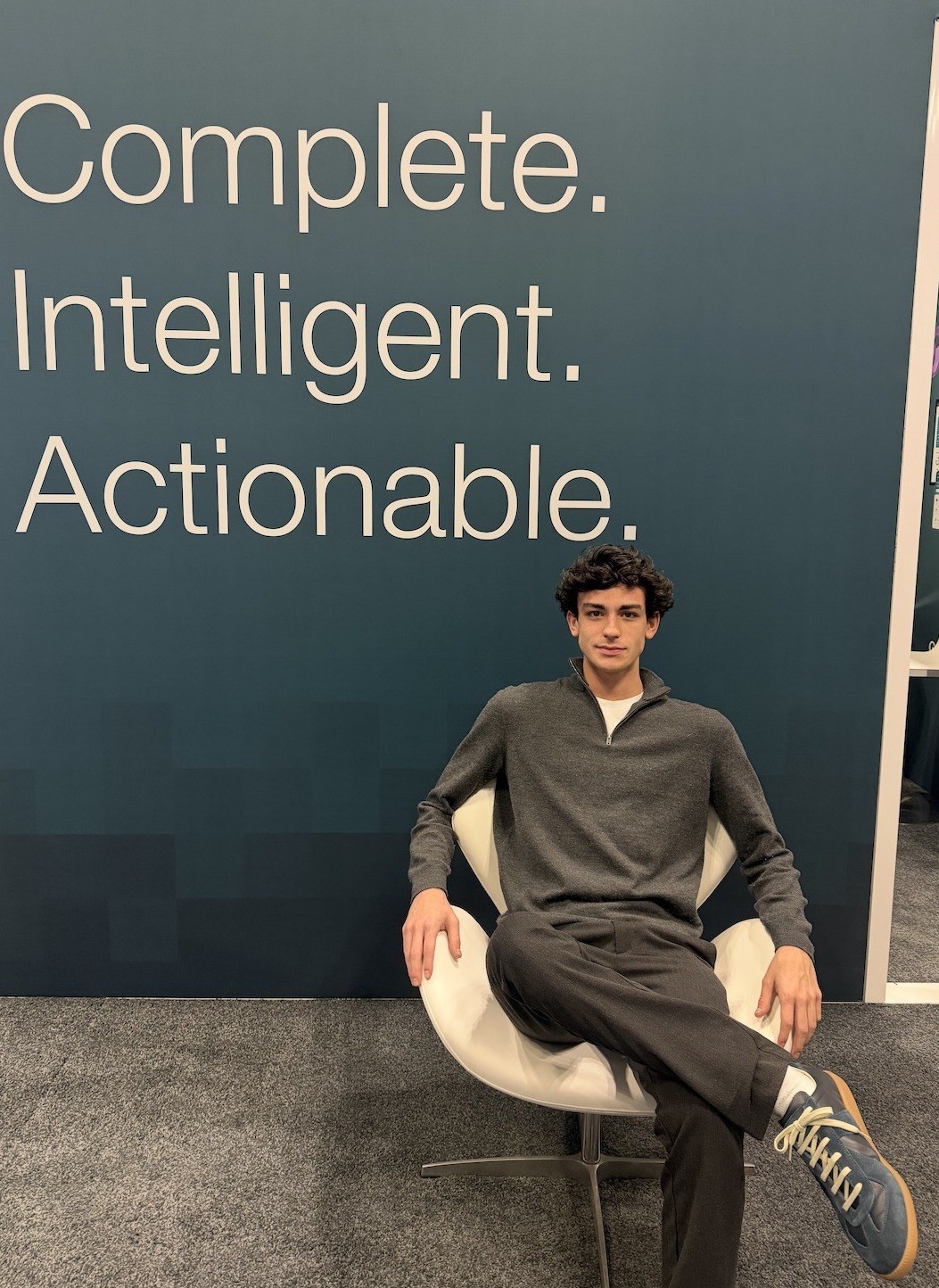
The bet paid off with unusual speed. Within three months he was selected into Antler Canada's TOR8 residency, the Toronto cohort of one of the most active day-zero investors in the world, a program that backs founders before there is a finished product, sometimes before there is a team, on the strength of the person. Out of it, Daniel raised $220,000 at a $2.2M post-money valuation at 19 for his first AI startup.
Then came the decision that says the most about him: he walked away from his own funded company to chase a larger thesis.
Reinventing M&A with AI
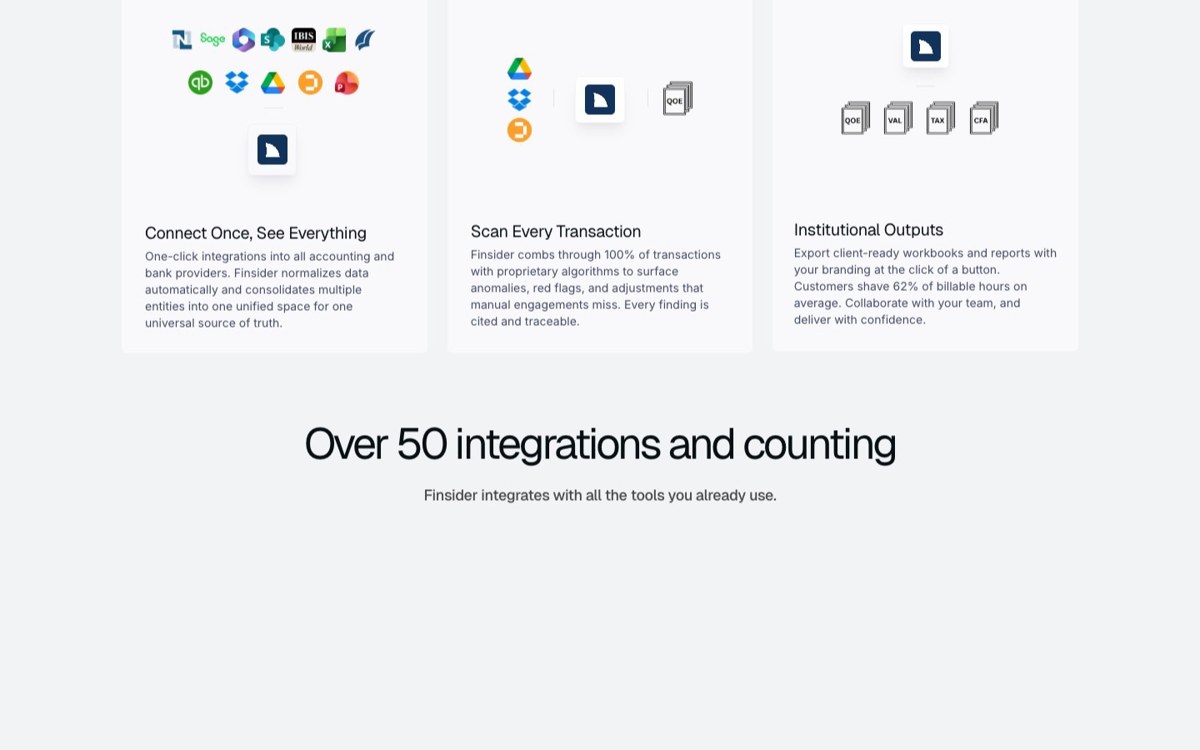
Daniel is now Chief Technology Officer at Finsider{dofollow}, where he is rebuilding how AI-native financial due diligence is performed. The wedge is the Quality of Earnings report, one of the most mandatory, time-consuming, and expensive deliverables in all of mergers and acquisitions. It is the document a buyer commissions before wiring hundreds of millions of dollars, the forensic check that confirms a target's profits are real, repeatable, and not the product of accounting creativity. Almost no deal of size closes without it; the work takes weeks, and senior accountants charge six figures to produce it.

Finsider's plan is to commoditize that report, to take a slow, artisanal, six-figure process and rebuild it as software. As CTO, Daniel owns the technical core: not a chatbot bolted onto a data room, but a reconstruction of the diligence workflow itself, from raw financial documents to a defensible conclusion. He is 20 and, by his own description, building the future of investment banking. You can see the product at finsider.ai{dofollow}.
Why the QoE is a tractable AI problem
For a technical audience, the choice of target is the interesting part. Much of finance resists automation because it depends on relationships and one-off judgment, exactly what language models are worst at. The Quality of Earnings is the opposite kind of task. Its inputs are documents. Its questions recur from deal to deal: normalize earnings for one-time items, test revenue recognition against reality, examine net working capital, measure customer concentration. Its output is a structured analysis, not a creative leap. And its entire value is accuracy.
That profile, document-grounded, repetitive, accuracy-critical, is precisely where well-designed AI systems can win. The catch is the accuracy bar. In diligence, "approximately right" is the same as wrong, because the number flows straight into a price. A tool that overstates normalized earnings by a few percent can cause a buyer to overpay by millions. The hard engineering problem is therefore not extraction; it is reliability. And reliability is exactly what Daniel chose to study.
The theory beneath the product
Daniel is not only a builder. He is the single author of Uncertainty Propagation in Tree-Structured Language Model Reasoning, research on the failure mode that sits underneath any attempt to automate reasoning: error compounding. When a model reasons across many steps, small inaccuracies do not cancel, they accumulate, so a chain that is highly reliable at each step can still end in a confident, wrong answer. His paper formalizes how that decay behaves and identifies when a tree-structured approach to reasoning, which explores and cross-checks multiple branches instead of marching down one, defeats it. The framework was validated against four frontier models to within roughly 1%.

This is the rare case where a founder's research and a founder's company describe the same problem. The paper is, in effect, a map of where the landmines are buried in a diligence tool, and the structural approach for stepping around them.
His second paper, The Information-Maintenance Hypothesis, swings harder. It argues that aging, intelligence, and markets are the same problem in information theory, anchored on two theorems. Landauer's principle holds that erasing information carries an unavoidable physical cost, information is physical, not free to discard. The Kelly-Cover identity ties the information, or edge, you hold directly to the optimal rate at which you can grow capital. Braiding biology, cognition, and finance into one framework is the kind of move that usually comes from a tenured polymath, not a 20-year-old CTO.
The AI-native founder, in one person
Daniel is an unusually clean example of a profile Silicon Valley is still learning to recognize: the AI-native builder. He never learned the pre-AI way of shipping software, so he carries none of its assumptions about how large a team you need or how much capital it takes to find out whether an idea works. For this kind of founder, the marginal cost of trying something has collapsed, and the binding constraint is judgment, knowing what to build and being willing to abandon a good-enough position for a better one.
That is the through-line of his short career. A profitable consultancy was a local maximum, so he left it. A funded startup was a local maximum, so he left that too, for a harder problem with a bigger prize. Each move traded comfort for slope.
The honest risks
A clear-eyed account names the obstacles. Encoding the judgment of a veteran diligence partner is genuinely difficult, and the long tail of unusual businesses, lumpy revenue, post-restructuring messes, creative sellers, is where automation tends to break. Incumbents hold deep client relationships and decades of trust. Conservative buyers are slow to stake nine-figure decisions on new tools. None of these is fatal, but all are real, and Finsider will have to clear each one.
What recommends Daniel against that field is not bravado but fit. He has shipped real revenue, raised real capital, and published on the precise technical risk his company must solve. That is an unusually complete toolkit for the specific problem in front of him, and a rare one at any age.
A new on-ramp into hard industries
There is a broader pattern worth drawing out of Daniel's path, because it is not unique to him so much as early in him. For most of software's history, breaking into a hard, regulated, relationship-heavy industry like finance required credentials, connections, and capital, the things a 20-year-old does not have. The barrier was not just technical; it was institutional. You had to be let in.
AI changes the on-ramp. When one capable builder can produce what used to take a team, the question stops being "who will let you in" and becomes "can you build something the industry cannot ignore." Daniel is testing that proposition directly. He is not asking permission to participate in the diligence business; he is building a tool he hopes makes the old way look expensive. Whether or not Finsider wins, that shift in who gets to attempt these problems is the larger story, and Daniel is one of its clearest early instances.
What clearing the bar would require
It is worth being concrete about what success demands, because the bar in diligence is unforgiving. A Finsider-produced Quality of Earnings has to be right not only on the clean, typical deal but on the awkward ones, the business with seasonal revenue, the company emerging from a restructuring, the seller with an inventive definition of "non-recurring." It has to be auditable, so a buyer's team can see why the system reached a conclusion rather than taking it on faith. And it has to be consistent enough, deal after deal, that trust compounds instead of eroding after a single bad miss.
Three numbers will ultimately tell the story: how much faster the report gets done, how much cheaper it becomes for the buyer, and, above all, how reliably its conclusions hold up against an experienced human reviewer. Faster and cheaper are the easy parts. Reliable is the hard one, which is exactly why a CTO who has published on the reliability of AI reasoning is the right person in the chair. You can follow the company's progress at {FIN2}.
A name to watch
From a dorm-room consultancy to the CTO chair, profitable before declaring a major, funded at 19, published twice on the foundations of machine reasoning, and now reinventing M&A with AI before most people his age have written a resume, Daniel is the kind of engineer Silicon Valley spends years trying to find early. Whether Finsider wins its market is a question for the next few years. The safer prediction is about the person: a builder who understands both how to ship and how the tools break is unusually well equipped to be right when it counts.