High Bandwidth Compute (HBC) Near-memory AI Compute
A data-driven Stanford Tech Review perspective on High Bandwidth Compute (HBC) near-memory AI compute and the memory wall.
Jordan Wells covers startups, applied AI, and the people building them.
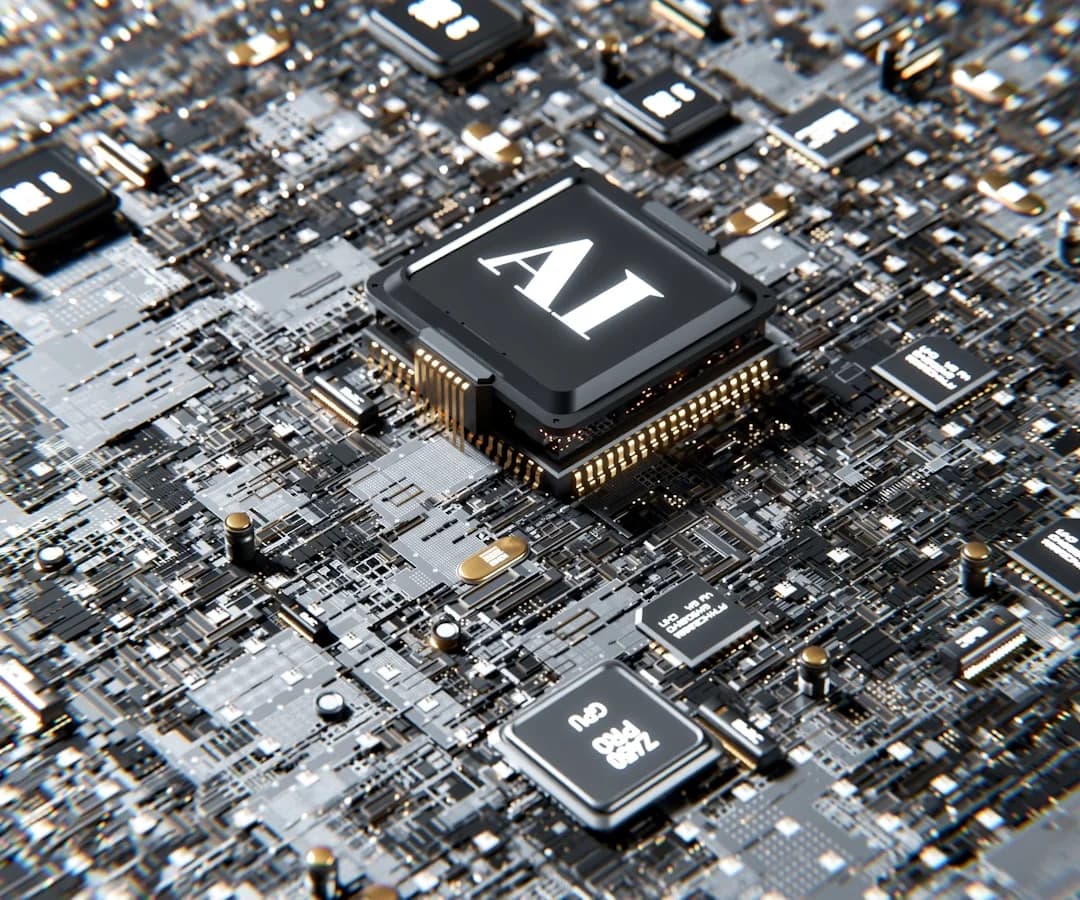
The AI memory wall is not a metaphor; it’s a measurable bottleneck that throttles progress as models grow larger and data flows become more demanding. In practice, this bottleneck shows up as diminishing returns when we chase bigger GPUs and faster chips without rethinking where data lives and moves. The concept I want to advance here is that High Bandwidth Compute (HBC) near-memory AI compute represents a meaningful shift in how we structure AI hardware, but it is not a silver bullet. It must be part of a broader, memory-centric strategy that includes software, data pipelines, and cross-layer coordination across memory and compute. This perspective is grounded in a careful look at the current landscape, the practical limits of near-memory approaches, and the real-world constraints of deploying these technologies at scale. As memory becomes the new bottleneck in AI systems, the promise of HBC near-memory AI compute is real, but its success will hinge on how well the ecosystem integrates memory, compute, and software.
The thesis I advance is simple: near-memory compute can materially alleviate the memory wall for AI workloads, but durable, scalable benefits require harmony across hardware, software, and data management. This is not a call to abandon traditional accelerators or to pretend that repositioning memory next to compute solves every problem. It is an argument for a more nuanced, architecture-aware approach to AI hardware—one that embraces the memory-software co-design imperative and prioritizes measurable gains in energy efficiency, latency, and throughput across representative workloads. In 2026, the industry is testing many facets of this thesis—from CIM and PIM concepts to commercial demonstrations of near-memory architectures. The key is to separate the loud marketing claims from engineering-proof benefits and to anchor decisions in rigorously measured outcomes. The following sections outline why the current state is promising yet incomplete, why I disagree with the notion that HBC alone will redefine AI performance, and what this means for researchers, engineers, and buyers going forward. The central question remains: can HBC near-memory AI compute deliver consistent, cross-workload improvements without sacrificing flexibility and ecosystem viability?
The Current State
The memory wall and AI workloads
The idea that memory bandwidth and latency constrain AI performance is widely recognized in both academic and industry circles. AI systems increasingly rely on rapidly moving large tensors, activations, and caches; the cost of data movement often dwarfs the cost of compute itself. This has spurred sustained interest in compute-near-memory and compute-in-memory paradigms, which place processing capabilities closer to or inside memory to reduce data transfers and energy use. The literature and industry discussions consistently point to data movement as a central bottleneck, not merely a secondary concern. This framing is echoed in recent reviews and analyses that describe near-memory computing (NMC) and CIM as responses to the energy and latency penalties of CPU–DRAM data movement in AI workloads. (frontiersin.org)
The emergence of HBC and CIM in industry discourse
Industry players are actively exploring architectures that fuse memory and compute to tackle memory bottlenecks. In 2023–2024, analyses and industry commentary highlighted the memory wall as a persistent constraint and outlined near-memory approaches as a strategic path forward. In late 2023 and into 2024, industry discourse began to crystallize around terms like near-memory computing (NMC) and compute-in-memory (CIM) as credible research-to-product pathways. Commercial discussions around HBC specifically have emerged, with companies describing architectures that aim to push computation closer to the memory boundary to improve throughput and energy efficiency for AI workloads. These discussions underscore a broader industry trend toward rethinking where memory ends and compute begins in AI data paths. (patsnap.com)
Market dynamics and consumer expectations
From data-center GPUs to AI accelerators, the market has responded with a mix of incremental bandwidth improvements and more radical architectures. Observers point out that while high-bandwidth memory (HBM) remains crucial, its benefits can be limited if software stacks and data pipelines are not co-optimized for memory-local execution. Moreover, the memory shortage phenomenon—driven by surging AI memory requirements—has elevated memory as a strategic constraint, influencing procurement decisions and vendor roadmaps. This dynamic is shaping how enterprises and researchers weigh near-memory strategies against traditional accelerator-centric upgrades. (techradar.com)
The academic and standards landscape
Scholarly work and professional venues have begun to formalize the distinctions between near-memory and in-memory approaches and to chart the evolving landscape of CIM, PIM, and related architectures. A growing body of literature emphasizes the potential performance and energy benefits of computing in or near memory, while also highlighting the substantial design and software challenges that must be overcome to realize those benefits in production. These sources collectively argue for a measured, evidence-based assessment of near-memory strategies rather than broad generalizations about universal superiority. (arxiv.org)
What this means for the reader
Put simply, HBC near-memory AI compute sits at the intersection of hardware innovation and software engineering. It promises meaningful improvements for data-intensive AI tasks, but its real value will depend on execution: how well memory and compute are integrated, how software tools capitalize on new hardware capabilities, and how results are measured across representative workloads. The literature and industry reports suggest that while HBC and CIM approaches can help, they are not one-size-fits-all solutions. The question is not whether these ideas are worth pursuing, but how to pursue them in a way that yields durable, reproducible gains across the diverse spectrum of AI tasks. (frontiersin.org)
Why I Disagree
Argument 1: HBC can reduce data movement, but software and data locality still dominate
The core argument in favor of HBC near-memory AI compute is straightforward: by shortening the data path between memory and the processor, we can lower energy per operation and reduce latency for memory-bound tasks. That logic is sound, and early demonstrations from industry players emphasize bandwidth-per-watt improvements and closer proximity of compute to data. However, the practical gains depend heavily on software ecosystems that can exploit memory-local computation. If the software stack remains agnostic to memory locality, or if model architectures and data pipelines do not cooperate with the memory topology, the theoretical bandwidth advantage fails to translate into real-world throughput. In other words, data locality must be baked into compiler toolchains, runtime libraries, and model deployment frameworks to realize the promised gains. This perspective is echoed in analyses that treat CIM/NMC as a systems problem spanning hardware and software layers rather than a hardware-only fix. (frontiersin.org)
Argument 2: Not all AI workloads benefit equally from near-memory strategies
A central counterpoint to the narrative that “more bandwidth equals more AI performance” is the heterogeneity of AI workloads. Some models and use cases are compute-bound rather than memory-bound, while others are memory-latency bound or rely heavily on long-context KV caches. In such cases, moving compute closer to memory yields inconsistent, workload-dependent gains. Early industry and academic perspectives emphasize that the benefits of near-memory approaches are most pronounced for memory-bound workloads and for data-paths with frequent memory traffic. As a result, adoption strategies should be workload-aware and phased rather than universal. This nuance matters when forecasting ROI and total-cost-of-ownership for memory-centric hardware investments. (frontiersin.org)
Argument 3: Integration costs, reliability, and ecosystem risk are real
Even if HBC near-memory AI compute delivers on bandwidth promises, the integration costs—silicon complexity, thermal management, packaging, tooling, and debugging—are nontrivial. The near-memory approach often implies new interconnects, new memory die integration schemes, and potentially new programming models. These factors introduce risk and require time to stabilize in the market. Industry commentary and product previews highlight that while there is enthusiasm for HBC-like architectures, the practical path to production-grade, broadly adopted systems remains uncertain. If the ecosystem fails to deliver mature software stacks, standardized interfaces, and reliable cooling and power management, the promised gains may be blunted in real deployments. (tomshardware.com)
Argument 4: CIM/NMC is a spectrum, not a single solution
The near-memory family includes PIM, CIM, and LIM variants, each with different trade-offs in terms of compute capabilities, data movement, and thermal characteristics. The literature consistently points to a spectrum of solutions rather than a single architecture that suits all AI workloads. A practical strategy is to blend these approaches with conventional accelerators, using hardware specialization and data-aware scheduling to route workloads to the most suitable memory-embedded or memory-near compute path. Adopting a diversified portfolio reduces single-point risk and can deliver more consistent performance improvements across varied AI tasks. (patsnap.com)
Counterarguments and where they land
Proponents of HBC near-memory AI compute argue that the AI memory wall is a bottleneck that will only intensify as models scale. They point to silicon-level innovations and early product announcements that promise substantial gains in bandwidth-per-watt and throughput. My position is not to dispute the reality of memory bottlenecks but to insist that architectural success depends on end-to-end coherence: hardware, software, and data management must be designed in concert. The most credible critiques emphasize the necessity of mature software ecosystems, clear performance benchmarks, and realistic total-cost-of-ownership analyses before broad adoption. This balanced view aligns with a data-driven, long-horizon perspective on AI hardware development. (frontiersin.org)
What This Means
Implications for research, industry collaboration, and procurement
First, the path forward requires cross-disciplinary collaboration across hardware designers, compiler developers, machine-learning engineers, and data-center operators. Near-memory architectures will only deliver durable value if software tools—compilers, libraries, and frameworks—are memory-aware and optimized for data locality. This means investing in code generation that can exploit memory-bound kernels, scheduling systems that keep data close to compute engines, and performance models that reflect end-to-end latency and energy figures rather than isolated hardware bandwidth metrics. For procurement, organizations should adopt a staged approach: pilot CIM/NMC-enabled systems on representative workloads, measure real-world improvements in latency and energy per inference/train step, and compare against traditional accelerator configurations under consistent workloads. This disciplined approach helps avoid misallocations in capital and ensures that architecture decisions reflect actual workload behavior rather than marketing promises. (frontiersin.org)
Implications for standards, interoperability, and ecosystem health
A second implication concerns standards and interconnects. The industry’s progress will be accelerated if there is progress toward interoperable interfaces, data formats, and scheduling primitives that enable software to move across memory hierarchies without rewriting stacks for each vendor. References to CXL-based memory expansion and evolving CIM/NMC ecosystems indicate a trend toward standardized, modular components that can be combined in multiple configurations. For organizations that operate large AI fleets, this interoperability can translate into lower switching costs and greater resilience against vendor-specific roadmaps. (semiconductor.samsung.com)
The role of research communities and independent validation
Independent validation of performance claims is essential. Given the complexity of memory hierarchies and the heterogeneity of AI workloads, peer-reviewed assessments and neutral third-party analyses will play a critical role in separating durable gains from hype. Academic venues and cross-institutional collaborations are uniquely positioned to test near-memory architectures under standardized benchmarks, publish reproducible results, and publish lessons learned about software co-design. This is not a call for abstraction; it is a call for rigorous, apples-to-apples evaluation across a spectrum of AI tasks, from vision transformers to long-context language models. The broader research community can help ensure that the industry’s near-memory promises translate into reliable, measurable performance improvements in practice. (arxiv.org)
Actionable takeaways for Stanford Tech Review readers
For readers at Stanford Tech Review and similar tech-forward institutions, the practical takeaway is to treat HBC near-memory AI compute as one tool in a broader, memory-aware toolkit. When evaluating new hardware platforms, prioritize:
- Workload characterization: quantify whether your AI tasks are memory-bound, compute-bound, or latency-bound, and map the expected gains to those profiles.
- Software readiness: assess the maturity of the toolchain, compilers, frameworks, and libraries that can exploit memory-local computation.
- Data path optimization: redesign data pipelines to exploit locality, prefetching, and caching strategies tailored to memory-near compute paths.
- Total cost of ownership: incorporate not just hardware price but energy, cooling, maintenance, software migration costs, and potential vendor lock-in.
- Independent validation: seek third-party performance evaluations on workloads representative of your use cases.
The market is moving toward architectures that consolidate memory and compute more tightly, but this evolution must be anchored in evidence, repeatability, and cross-disciplinary collaboration. This is how we turn the memory-centric thesis into durable, widely usable AI acceleration. (frontiersin.org)
Closing
High Bandwidth Compute (HBC) near-memory AI compute is a compelling direction in the ongoing effort to mitigate the AI memory wall. It represents a meaningful shift in how we organize memory and computation to address data movement costs, but it is not a universal antidote. The most credible path forward blends memory-local acceleration with smarter software, tunable data pipelines, and cross-layer design principles. As the industry tests CIM, PIM, and related approaches, the most persuasive gains will come from architectures whose hardware, software, and data management practices are developed in concert and validated on real workloads. If we can translate near-memory theory into disciplined practice, HBC can become a durable lever for AI performance, energy efficiency, and scalability—without sacrificing the flexibility that makes modern AI research and deployment so dynamic. The challenge—and the opportunity—lies in building an ecosystem that can consistently demonstrate value across diverse models, data regimes, and operational environments.
In short, the memory wall remains a central constraint, and HBC near-memory AI compute is a critical piece of the solution. But the full payoff will only emerge when hardware design, software tooling, and data-path strategies converge, and when we commit to rigorous measurement and responsible deployment. This is how Stanford Tech Review—and the broader AI research and industry community—will translate a promising architectural concept into a lasting, data-driven advantage for AI systems.