Liquid Cooling for AI Data Centers in Silicon Valley 2026
Explore a comprehensive, data-driven perspective on advanced liquid cooling solutions for AI data centers in Silicon Valley by 2026.
Jordan Wells covers startups, applied AI, and the people building them.
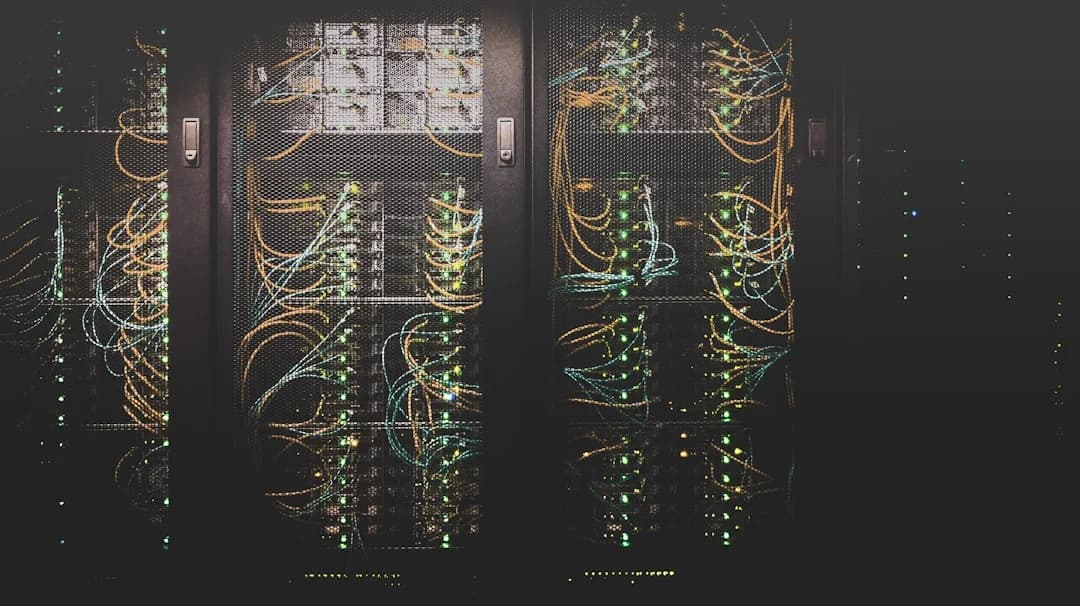
The question isn’t whether liquid cooling belongs in Silicon Valley’s AI data centers this year; it’s whether we can responsibly build and operate AI infrastructure without embracing it. Liquid cooling for AI data centers in Silicon Valley 2026 is not a niche engineering detail. It’s a defining factor in how much AI compute the region can sustain, at what cost, and with which environmental footprint. As AI models grow larger and faster, the thermal burden on high‑density racks becomes the limiting constraint on performance, reliability, and timeline. The practical takeaway today is simple: if you want to scale responsibly in a knowledge-driven economy, you must treat liquid cooling as a core strategic capability, not a back-office upgrade. This piece argues that the convergence of higher heat densities, evolving cooling architectures, and a policy- and standards-driven market makes liquid cooling a baseline expectation for AI data centers in Silicon Valley in 2026. The logic rests on observed trends, benchmark work, and industry analyses that consistently point to two core truths: liquid cooling dramatically strengthens heat removal at the source, and its adoption is becoming increasingly intertwined with AI density, energy efficiency, and long-term resilience. (techtarget.com)
As a data-driven observer of technology and market trends, I’ll present a clear thesis, grounded in evidence from independent research and industry analyses. The central claim is that Liquid cooling for AI data centers in Silicon Valley 2026 is not just a technical preference; it is a strategic necessity for sustaining AI workloads at scale, reducing energy intensity, and enabling next‑gen architectures in a region known for innovation and capital efficiency. The argument unfolds in three acts: first, a snapshot of the current state and the pressures AI workloads impose; second, a rigorous case for why adopting liquid cooling is warranted (and not merely attractive); and third, the practical implications for operators, policymakers, and ecosystem builders in Silicon Valley. The discussion draws on recent white papers, multi‑vendor analyses, and independent assessments that collectively map the transition from air‑based cooling to liquid cooling as a market‑driven, technically necessary shift. For readers seeking a synthesis, this piece provides a balanced, data‑driven perspective with concrete implications for strategy and investment. The stakes are real: as AI scales, cooling becomes a core constraint and a core lever for growth. As the IEA’s 2026 review underscores, liquid cooling technologies are central to achieving energy and thermal efficiency at AI‑driven scales, while acknowledging the complexities of broader adoption. (iea-4e.org)
The Current State
The cooling landscape is shifting under the pressure of AI‑first workloads. Traditional air cooling, while still foundational for many existing facilities, is being challenged by the heat fluxes generated by modern accelerators, which can push densities far beyond what air can efficiently manage. As AI training and inference converge on denser GPU clusters, the need for more effective heat removal at or near the heat source has become apparent. Industry analyses note that high‑density AI deployments generate heat at levels that air cooling struggles to accommodate without escalating energy use or compromising reliability. This is not speculative: credible studies and industry snapshots describe the move toward cooling strategies that place heat removal closer to the heat sources, including direct‑to‑chip cooling and immersion options. (techtarget.com)
Prevailing assumptions in Silicon Valley have long treated liquid cooling as a specialized, higher‑cost option suited for extreme densities or greenfield builds. Yet a growing corpus of white papers and market analyses indicates a broader shift: liquid cooling is becoming a practical baseline for AI facilities that aim to achieve predictable performance, better energy efficiency, and improved reliability at scale. For example, discussions around two‑phase direct‑to‑chip liquid cooling emphasize its potential to better handle the increasing peak heat loads of AI chips while enabling higher rack densities. This is not merely theoretical; recent white papers frame two‑phase liquid cooling as a scalable solution that supports next‑generation AI infrastructure and resilient operation. (datacenterdynamics.com)
In Silicon Valley, where innovation and capital efficiency shape project timelines, liquid cooling is increasingly seen as a capability that enables ambitious data center designs. Industry overviews highlight that direct‑to‑chip cooling, alongside rack‑level approaches like rear‑door heat exchangers and immersion cooling, is gaining traction as densities rise and AI workloads become more variable and intense. The practical narrative going into 2026 is that the region’s operators, whether hyperscale, cloud, or leading research facilities, are evaluating liquid cooling not only for thermal performance but also for integration, modularity, and risk management. This aligns with broader market signals about the transition from air‑centric to liquid‑centric cooling designs as AI demand grows. (techtarget.com)
What the current literature and industry analyses consistently show is that AI‑driven cooling is evolving into a multi‑layered problem and a multi‑channel solution. Two‑phase liquid cooling and direct‑to‑chip approaches are highlighted as enabling higher densities and more precise heat removal, while immersion cooling remains a strong option for ultra‑high densities. The energy and water implications, as well as the potential for heat reuse and system redundancy, are central to these discussions. The IEA’s 2026 assessment emphasizes the need to adapt cooling to high densities and AI‑driven growth, while acknowledging that policy and diffusion of innovations will shape adoption timelines. (iea-4e.org)
Section 1: The Current State in Silicon Valley
Rising heat density from AI workloads
The scale of AI compute is driving heat densities that challenge air cooling. As AI models scale and hardware evolves, rack and server densities are pushing beyond what conventional cooling systems were designed to manage. This trend—driven by AI training and inference workloads—has been documented across industry analyses and research papers. Direct comparisons show that as workloads push power densities higher, the cooling approach must evolve accordingly, with liquid cooling offering a more direct and efficient heat transfer mechanism. The TechTarget overview notes that AI workloads are pushing densities beyond what traditional air cooling can handle, highlighting the shift toward integrated air/liquid approaches and the potential role of immersion cooling for the densest deployments. (techtarget.com)
The cooling landscape: air remains foundational, but liquid grows in importance
Air cooling remains a practical baseline for many facilities operating at moderate densities, particularly in older or retrofitted spaces. But the practical reality is shifting: rising heat loads and the economics of energy consumption are recasting the cooling decision. The TechTarget article explicitly frames the evolving landscape as a move toward hybrid strategies that combine air and liquid cooling to match density profiles, while also noting immersion as a viable option for the highest densities. This aligns with broader industry commentary about the limits of air cooling and the need for targeted liquid cooling at the component and rack levels. (techtarget.com)
Two recent white papers further illuminate the current state. The Accelsius‑driven white paper on universal liquid cooling argues that two‑phase direct‑to‑chip cooling can deliver energy efficiency gains and support higher density deployments critical to modern AI workspaces. The document emphasizes that scalable, direct‑to‑chip cooling is increasingly central to future AI infrastructure. In parallel, the DCD white paper on universal liquid cooling underscores how higher rack densities and increasing thermal demands are pushing operators toward direct‑to‑chip and immersion strategies as core design choices. Taken together, these sources illustrate a market rapidly moving toward liquid cooling as a standard element of AI data center design, rather than a niche enhancement. (datacenterdynamics.com)
Standards, standards, standards: the market looks for common language and interoperability
A critical component of the current state is the movement toward standards and interoperability in liquid cooling. The IEA’s 2026 assessment highlights the role of standardization bodies like ASHRAE and the Open Compute Project in shaping interfaces, connectors, and safe operating practices for liquid cooling systems. This is not merely academic; it matters for rollout speed, maintenance, and the ability to retrofit existing facilities. The IEA report frames standardization as a key barrier and an enabler alike, underscoring that the diffusion of liquid cooling technologies hinges on practical, consensus-based interfaces and reliability expectations. (iea-4e.org)
The current state, then, is a Silicon Valley that recognizes liquid cooling as a practical necessity for AI scale, while still navigating the real-world constraints of retrofit, cost, and operational risk. The region’s innovation ecosystem is actively testing, validating, and negotiating the transition—driven by data on density, reliability, and energy efficiency, and guided by emerging standards and industry research. The result is a measured but decisive pivot from air-centric cooling to liquid‑based strategies that can more reliably support the next wave of AI workloads. The IEA’s synthesis of industry dynamics reinforces this interpretation, noting that the AI‑driven expansion of data centers is closely linked to accelerated liquid cooling adoption, with the potential for substantial energy savings but requiring careful policy and market coordination. (iea-4e.org)
Section 2: Why I Disagree (The Case for Liquid Cooling as a Baseline in Silicon Valley 2026)
Positioning this as a deliberate stance rather than a cautious optimist’s view, I argue that Liquid cooling for AI data centers in Silicon Valley 2026 should be treated as a foundational capability, not a strategic upgrade. The logic rests on four interlocking arguments: density, efficiency, risk/operations, and standardization. Each strand is supported by contemporary research and market analyses that illuminate the path forward.
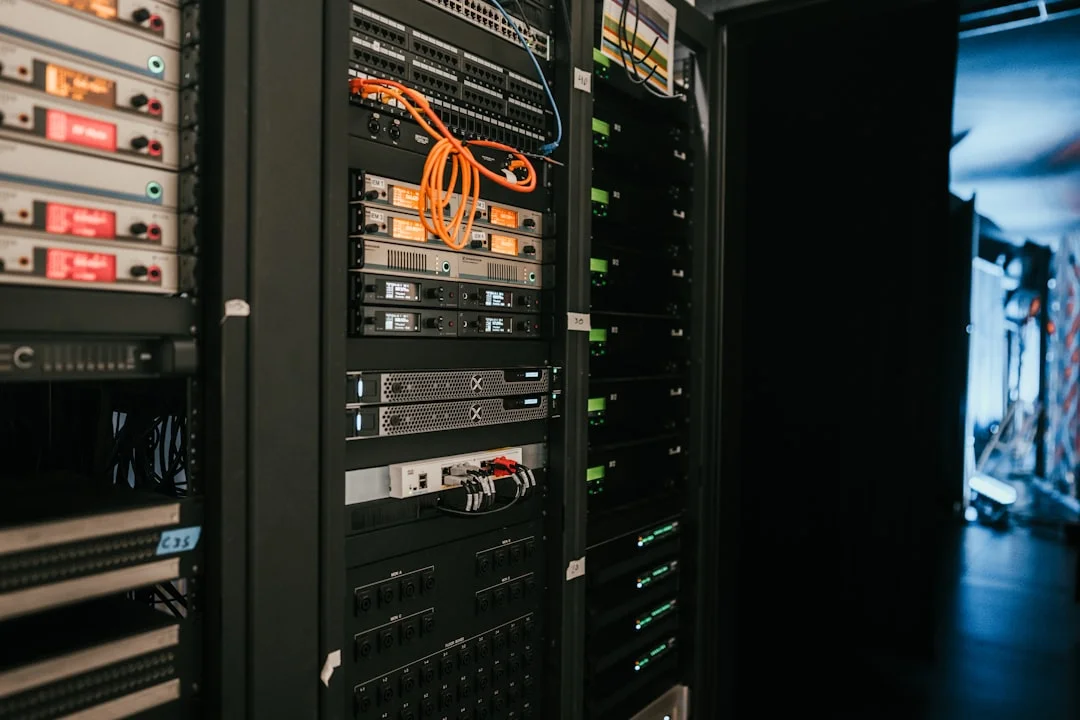
Photo by Kevin Ache on Unsplash
Argument 1: Heat density and AI workloads make liquid cooling a practical necessity
AI compute is inherently heat‑dense, and the trend is unmistakable: higher TDP components, more GPUs per rack, and longer compute cycles mean more sustained heat and more intense cooling demands. The 2026 literature consistently identifies AI workloads as the primary driver of liquid cooling adoption, with high density and sustained heat output underscoring why traditional air cooling reaches its practical limits. The IEA report, for instance, notes that AI data centers are a major driver of the shift toward liquid cooling, especially as heat densities rise and workloads become more concentrated in high‑density configurations. In other terms: the physics of heat removal supports liquid cooling as not just advantageous but necessary for AI densities typical of modern data centers. (iea-4e.org)
Direct technical work reinforces this view. A 2026 arXiv study on direct‑to‑chip liquid cooling for the NVIDIA GB200 Grace Blackwell Superchip shows tangible performance and thermal benefits when cooling is brought directly to the heat source, arguing for topology optimization to address hot spots and nonuniform temperature distributions in heterogeneous AI systems. Although the study focuses on chip‑level cooling, the implication is clear: liquid cooling offers a more effective heat extraction path for the kinds of AI accelerators increasingly deployed in modern data centers. The same thread is echoed by other research that demonstrates significant reductions in peak temperatures and improvements in energy efficiency when liquid cooling is employed at the chip or component level. (arxiv.org)
In Silicon Valley’s ecosystem, where time to deployment and return on investment are highly scrutinized, this isn’t a “nice to have.” It is a capacity requirement for AI scale. The practical takeaway from both industry surveys and technical research is that as AI models continue to scale, the density ceiling of air cooling is approached or exceeded in many configurations. The data points to a near‑certain trajectory: AI compute growth will increasingly depend on liquid cooling as the means to maintain performance at a reasonable cost and risk profile. (techtarget.com)
Argument 2: Economic and environmental considerations push liquid cooling from nice-to-have to baseline
Economic arguments for liquid cooling hinge on total cost of ownership and energy efficiency. The 2026 market materials emphasize that cooling is transitioning from a “facilities” question to a strategic lever for uptime, scalability, and sustainability. Frost & Sullivan’s white paper asserts that cooling is becoming a strategic enabler of performance and resilience in AI infrastructure, highlighting the shift toward liquid cooling architectures and direct‑to‑chip designs as central to competitiveness in AI‑driven markets. In other words, cooling is now a strategic asset rather than a mere infrastructure expense. This framing aligns with broader market analyses that view liquid cooling as a transition that can yield energy and reliability dividends over the lifecycle of AI deployment. (frost.com)
Quantitative modeling further strengthens the case. The IEA report’s global energy savings section, while cautious about specifying AI‑specific savings in all contexts, describes scenarios in which liquid cooling adoption reduces IT energy and facility energy, particularly as densities rise and as DTC, immersion, and other liquid cooling options scale. The message is clear: higher penetration of liquid cooling in AI data centers can meaningfully improve energy intensity, with additional efficiency gains tied to heat reuse opportunities and more precise cooling governance. It’s not a guaranteed miracle, but the signal is consistent: the potential gains are material enough to shift the cost/benefit calculus in favor of earlier adoption in density‑driven markets like Silicon Valley. (iea-4e.org)
In practice, the economics of retrofit and retrofitting risk must be weighed, but the market data show that ease of retrofit and ongoing operating costs are central to decision making. The IEA analysis identifies retrofit complexity and ongoing costs as items to weigh, but it also notes that heat dissipation and density considerations will push operators toward liquid cooling where heat loads justify the investment. In the Silk‑Valley context, where many facilities are older but highly valuable, the decision to retrofit or to adopt liquid cooling at the design stage hinges on a careful assessment of heat density, reliability needs, and the ability to manage long‑term energy costs. The market literature cautions that policy or standards alone cannot drive adoption; the decision must be grounded in a concrete capacity to reduce energy bills and improve reliability across the life of the facility. (techtarget.com)
Argument 3: Risks and challenges are real, but not insurmountable
Detractors often raise concerns about the cost, complexity, and vendor lock‑in associated with liquid cooling. The reality is nuanced: liquid cooling introduces new design, safety, and maintenance considerations, and it requires careful integration with existing infrastructure. The TechTarget piece highlights the need for integrated strategies, including monitoring, redundancy, and heat reuse, and it emphasizes that a one‑size‑fits‑all approach is inadequate. The evolving guidance suggests that successful adoption depends on modular, scalable architectures, with attention to reliability engineering, leak management, and redundancy. In Silicon Valley, where uptime and resilience are critical, these concerns are real but addressable with rigorous planning and engineering discipline. (techtarget.com)
From a policy and standards perspective, standardization plays a dual role: it reduces risk and accelerates diffusion, but it also requires coordination among vendors, customers, and operators. The DCD white papers emphasize the push toward universal liquid cooling standards, which would help operators compare options, plan retrofits, and ensure interoperability across vendor ecosystems. The IEA report likewise frames standardization as a pivotal element that can unlock broader adoption by reducing integration risk and enabling heat reuse practices. Silicon Valley stakeholders should view standards development not as a regulatory burden but as a strategic infrastructure enabler that reduces long‑term risk and accelerates deployment. (datacenterdynamics.com)
Argument 4: The need for a balanced, hybrid approach
A final nuance is that the transition to liquid cooling is not a wholesale replacement of air cooling. Industry analyses consistently describe a hybrid cooling future in which the right cooling method is applied to the right density and workload. Air cooling will likely remain essential for many parts of the installed base, while liquid cooling—through D2C, RDHx, and immersion approaches—will be deployed where densities demand it. That balanced stance aligns with the consensus that the data center of 2026 is not an all‑or‑nothing system but a layered thermal architecture designed to optimize efficiency and reliability across diverse workloads. This hybrid reality reflects both the technical and economic realities that Silicon Valley operators face: it minimizes risk while enabling a scalable path to higher densities. (techtarget.com)
Section 3: What This Means (Implications for Silicon Valley in 2026 and Beyond)
If the thesis—Liquid cooling for AI data centers in Silicon Valley 2026 as a baseline capability—holds, what changes? What should operators, policymakers, and ecosystem players do differently? The implications fall into three actionable domains: strategic design choices, policy and standards alignment, and workforce and ecosystem development.
Implications for design and operations: adopt modular, scalable liquid cooling baselines
The practical implication is straightforward: plan for liquid cooling as a core design element, not a retrofit afterthought. The white papers from Accelsius and DCD argue that two‑phase direct‑to‑chip cooling and immersion cooling enable higher densities and better energy efficiency, and that scalable, modular cooling architectures are essential to support AI growth. For Silicon Valley operators, this translates into adopting liquid cooling as the default in new builds and approaching retrofits with a modular, staged plan that prioritizes heat extraction at the source, downstream heat reuse, and robust monitoring. The emphasis on modularity and scalability is echoed in industry analyses, including those that highlight reliability engineering, leak management, and redundancy as central considerations in liquid cooling deployments. (datacenterdynamics.com)
A practical design takeaway is to couple liquid cooling choices with advanced monitoring and data analytics. The TechTarget article highlights dense sensor networks and predictive maintenance as central to scalable liquid cooling, with machine learning playing a role in optimizing operation and reducing unplanned downtime. In Silicon Valley’s data centers, this means investing in integrated cooling intelligence, telemetry, and analytics that can adapt to changing workloads and seasonal variations. In other words, a sea change in cooling strategy should be accompanied by a parallel upgrade to data-driven operations and predictive maintenance. (techtarget.com)
Implications for policy, standards, and heat reuse
Policy and standards will shape diffusion and diffusion speed. The IEA report emphasizes the importance of policy alignment, heat reuse ecosystems, and standardized interfaces that enable smoother retrofits and more predictable operation. In Silicon Valley, where sustainable innovation is a driver of investment, policies that recognize and reward energy efficiency gains from liquid cooling—while ensuring transparent reporting—could help accelerate diffusion without stifling innovation. The open questions concern heat reuse, waste heat markets, and how to measure and attribute energy benefits in AI‑led facilities. The 2026 literature suggests policy should focus on energy reporting, heat reuse infrastructure, and grid readiness to accommodate rapidly deployed AI data centers rather than attempting to micromanage technology choices. (iea-4e.org)
From a standards perspective, the push toward universal liquid cooling standards matters. The DCD white paper on universal liquid cooling and the Accelsius report both argue that scalable, standard interfaces and connectors are essential to achieve broad adoption and interoperability. Silicon Valley operators should monitor these standardization efforts, engage with industry groups, and participate in pilots that test interoperability across vendor ecosystems. Standardization reduces risk, lowers integration costs, and accelerates diffusion in a region where time to market is a competitive differentiator. (datacenterdynamics.com)
Implications for the workforce and ecosystem development
A shift to liquid cooling at scale will reframe the skill sets needed in Silicon Valley’s data centers. The new paradigm demands technicians who understand liquid cooling systems, heat exchangers, dielectric coolants, leak management, and the integration of coolant loops with racks and power infrastructure. It also requires data scientists and operators who can mine telemetry data to optimize heat removal, predict failures, and orchestrate a hybrid cooling architecture that adapts to workload variability. Industry analyses emphasize that workforce development will be essential to realize the full benefits of liquid cooling, with training and certification playing a central role in building a capable ecosystem. Silicon Valley’s strength in technical education and industry collaboration positions it well to lead in this domain. (techtarget.com)
Operationally, the ecosystem should aim to combine best practices from multiple cooling strategies—DTC, RDHx, and immersion—into a cohesive deployment plan that allows for staged density increases and heat recovery where feasible. The IEA report’s policy and technology sections emphasize that AI‑driven cooling innovation is accelerating, suggesting that the diffusion path will favor modular, rapidly deployable solutions that can scale with hardware advances. Silicon Valley operators should articulate a clear roadmap that aligns hardware refreshes, cooling architecture upgrades, and energy management goals with their broader AI strategy. (iea-4e.org)
Conclusion
Liquid cooling for AI data centers in Silicon Valley 2026 should be viewed as a strategic necessity rather than a speculative upgrade. The convergence of rising AI heat densities, evolving liquid cooling architectures, and a standards‑driven market environment makes liquid cooling a baseline capability for sustainable AI scale in the region. The evidence is consistent across independent studies and industry white papers: direct‑to‑chip cooling, immersion cooling, and hybrid approaches enable higher densities, lower energy intensity, and greater reliability—while still requiring careful planning around retrofit, cost, and interoperability. The path forward is not a single technology choice but a layered, modular approach that pairs cooling architecture with heat reuse, robust monitoring, and a policy and standards framework designed to accelerate diffusion. For Silicon Valley to sustain its leadership in AI innovation, cooling must be designed as a deliberate, integrated, and data‑driven component of the data center strategy.
If we embrace this shift with intentional design, active standardization, and a workforce equipped for modern liquid cooling ecosystems, the region can unlock higher densities, more predictable performance, and deeper operational resilience. The opportunity isn’t merely to upgrade cooling; it’s to reimagine how AI compute is housed, cooled, and powered—creating infrastructure that can responsibly support the exponential growth of AI in the years ahead. The industry is moving in this direction, and Silicon Valley is uniquely positioned to lead the way through thoughtful adoption, rigorous testing, and collaborative development with standards bodies, researchers, and policymakers.
In sum, the transition to liquid cooling is not optional—it’s the enabler of scalable, energy‑efficient AI in a region defined by ambitious compute dreams and careful stewardship of resources. The work ahead will require disciplined engineering, clear governance of safety and reliability, and a shared commitment to standards and interoperability that makes these advanced cooling architectures accessible, affordable, and resilient for the long haul. If we align our practices with the evolving evidence, Silicon Valley can sustain its AI leadership while advancing sustainable, high‑density data center operations that set a global example.
Notes, caveats, and guidance for readers: The discussion above relies on a growing corpus of industry analyses, white papers, and research on AI‑driven data center cooling. Some estimates and projections vary by workload, climate, and facility type; ongoing data collection and standardized metrics will be essential for precise ROI calculations across sites. Readers should regard this piece as a perspective grounded in current signals about density, efficiency, and standards, and not as a guaranteed forecast. For readers seeking deeper, source‑level detail, the cited sources provide a foundation for understanding the thermal and economic dynamics at play in AI‑driven data centers in 2026.
Cooling is no longer simply a facilities issue – it is becoming central to data centre efficiency, uptime resilience, and sustainable digital growth in the AI era. — Frost & Sullivan, Strategic Cooling for the AI Era (summary of key takeaway) (frost.com)
Key references and evidence (selected):
- DCD: Universal liquid cooling: the next data center standard (two‑phase direct‑to‑chip cooling and scalability). (datacenterdynamics.com)
- DCD: DCD Survey on Cooling (2026): AI densities, liquid cooling adoption, and open standards. (datacenterdynamics.com)
- TechTarget: Scaling AI data center cooling for high-density servers (2026): integration of air and liquid cooling, retrofit considerations. (techtarget.com)
- IEA 4E: DC6 Final Report on Liquid Cooling in Data Centres (2026): drivers, density requirements, and policy implications; AI as a prominent driver; potential energy savings and diffusion challenges. (iea-4e.org)
- Frost & Sullivan: Strategic Cooling for the AI Era (May 2026): cooling as a strategic enabler; adoption of liquid cooling architectures and reliability considerations. (frost.com)
- ArXiv: Generative Design for Direct-to-Chip Liquid Cooling for Data Centers (2026): chip‑level cooling performance improvements and design approaches. (arxiv.org)
- ArXiv: Cooling Matters: Benchmarking LLMs on Liquid‑Cooled vs Air‑Cooled systems (2025): demonstrated performance and energy efficiency benefits of liquid cooling in AI workloads. (arxiv.org)