Shadow Power Grid AI Data Centers: A New Energy Frontier
Analyzes how shadow power grid AI data centers shape energy markets, grid reliability, and policy with data-driven insights.
**Nil Ni** is a seasoned journalist specializing in emerging technologies and innovation. With a keen eye for detail, Nil brings insightful analysis to the *Stanford Tech Review*, enriching readers' understanding of the tech landscape.
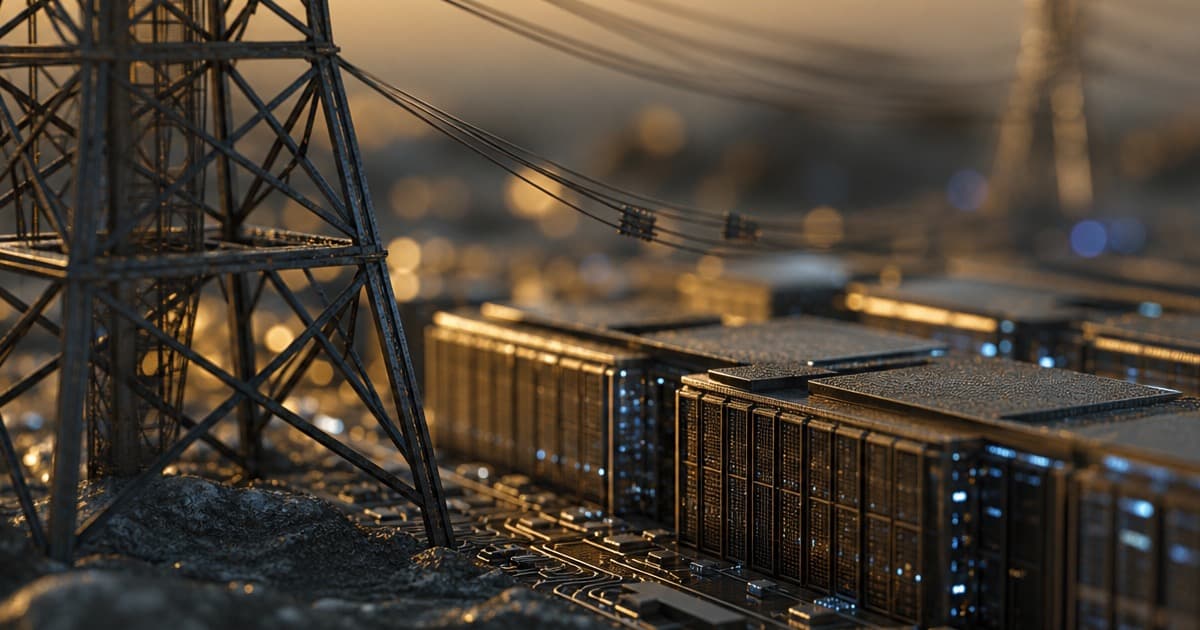
The question isn’t whether AI data centers exist; it’s how their energy footprint reshapes the broader electricity system. In public debates and boardroom discussions, a phrase has begun to surface: shadow power grid AI data centers. The notion isn’t that a secret parallel grid exists, but that a rapidly expanding, privately coordinated layer of energy infrastructure—often tied to on-site generation, private microgrids, and aggressive renewable procurement—now helps determine when, where, and how electricity is used in ways that the traditional public grid alone cannot fully capture. This is no longer a niche concern about servers humming in a closet; it is a national-scale energy trend with implications for reliability, prices, and policy design.
My position is clear: the rise of shadow power grid AI data centers is real enough to demand deliberate policy attention and market design that bring these private energy networks into transparent planning with the public grid. It is not enough to treat data centers as mere consumers of electricity; they are becoming active participants in the energy economy—shaping demand curves, accelerating or complicating grid upgrades, and influencing the pace of decarbonization. This perspective is grounded in data—what we know about data center electricity use, energy sources, and procurement patterns—and in a close reading of how leading operators align their energy strategies with technical and policy constraints. The article that follows builds a data-driven, opinionated case for why this trend matters, how it should be understood, and what policy and market actions could align private energy strategies with shared public goals.
Section 1: The Current State
Scale and Demand Trajectories The scale of data center electricity demand in the United States has grown rapidly, driven in large part by AI workloads that require substantial compute resources. Recent analyses anchored in IEA and U.S. data show that data centers consumed about 183 terawatt-hours (TWh) of electricity in 2024, accounting for more than 4% of the nation’s total electricity consumption. By 2030, estimates project this footprint to more than double, with energy use potentially rising to around 426 TWh if growth continues unchecked. This is not a theoretical concern; it translates into tens of billions of dollars of energy costs, heavy demand on regional grids, and a pace of growth that outstrips many traditional industries. As one observer notes, data centers’ energy consumption is a central, accelerating line item in future electricity planning. (pewresearch.org)
What this means in practice is that AI-optimized hyperscale data centers are now a dominant driver of electricity demand in several markets, often concentrated in a handful of states. The same data show that regions like Virginia, which hosts a large cluster of facilities, accounted for roughly a quarter of the state’s electricity supply in 2023 due to concentrated data center load. This regional concentration magnifies the need for robust interconnection capacity, capable resilience planning, and explicit cost allocation when new facilities connect to the grid. The central takeaway: data centers are no longer peripheral energy users; they are central, dynamic players in the energy system. (pewresearch.org)
Where the Power Comes From Understanding the energy mix behind data centers is essential to assessing their true climate and reliability footprints. As of 2024, data centers sourced electricity from a mix that includes natural gas, renewables, nuclear, and coal, with natural gas supplying the largest single share of electricity for data centers (roughly 40%+ in the IEA-verified data), renewables contributing a meaningful slice (around a quarter), nuclear around one-fifth, and coal a smaller, though non-trivial, portion. This mix has clear decarbonization implications: while renewables are expanding, a sizable portion of day-to-day electricity for AI workloads still comes from gas-fired generation, with policy and market levers needed to push this mix further toward clean sources. The share of natural gas remains a structural feature of U.S. data-center energy supply, even as corporate procurement actions push renewables more aggressively through PPAs, virtual PPAs, and on-site generation. (pewresearch.org)
The natural-gas–heavy mix, coupled with the high power density of AI workloads, also means data centers stress local transmission and distribution networks in ways that aren’t always visible in headline energy statistics. In short, data centers concentrate demand not only in time but also in space, pressuring grid operators to plan for peak interconnection, expansions of substation capacity, and effective congestion management. Industry observers have documented that clean-energy procurement—led by hyperscalers—played a pivotal role in the overall energy transition in 2024, underscoring that data-center energy strategies can accelerate decarbonization when aligned with grid realities. (spglobal.com)
Geographic Concentration and Grid Strain Electricity demand from data centers is not evenly distributed; several markets experience outsized effects. The Virginia case—from 2023 data—illustrates how data-center load can dominate regional electricity supply, creating a capacity planning flag for utilities and regulators. This concentration means that grid reliability and pricing signals in these zones can become highly sensitive to data-center development cycles, interconnection queues, and local permitting timelines. The public conversation around grid strain in these regions has intensified alongside policy proposals and infrastructure upgrades aimed at easing bottlenecks and ensuring reliable service for both data centers and residential customers. (pewresearch.org)
A provocative strand of public discussion argues that data centers are partially building a private “shadow grid” through on-site generation and microgrids, effectively bypassing some public grid constraints. A high-profile report in February 2026 highlighted Silicon Valley investments in off-grid or semi-off-grid data-center configurations designed to avoid hookup delays and regulatory constraints. Critics warn that this trend could raise carbon emissions if on-site generation leans on fossil fuels, and could shift costs onto ratepayers if infrastructure costs are socialized. Proponents counter that microgrids and private energy arrangements can improve resilience and speed deployment, particularly in regions with stressed public grids. The truth likely lies somewhere between these views and will depend on jurisdiction, technology choices, and the evolution of market structures that price resilience and carbon jointly. (washingtonpost.com)
Industry Response: Procurement Patterns and Market Momentum The data-center sector has been at the vanguard of corporate clean-energy procurement in recent years. In 2024, data centers led the surge in corporate renewable procurement, with many deals structured as PPAs (physical or virtual) to secure long-term price visibility while accelerating renewable energy deployment. Reports from S&P Global and industry observers show that tens of gigawatts of PPA capacity were contracted in 2024, with a sizable portion directed at data-center loads. This procurement dynamic demonstrates that the data-center energy footprint is becoming an engine for broader clean-energy markets, not just a consumer of electricity. It also signals that any policy or regulatory framework affecting data centers will have spillover effects on renewable development and electricity pricing more broadly. (spglobal.com)
The conversation about energy procurement is not merely about “green claims” but about real financial and operational structures. Technologies such as PPAs (physical, virtual, sleeved, and hybrid forms) and the use of energy certificates (RECs) underpin how data centers claim and realize renewable energy usage across markets. As procurement becomes more sophisticated, it also raises questions about transparent cost allocation for interconnection and grid upgrades, which has become a central policy topic in some regions. Analysts and journalists have documented that interconnection costs for large data-center projects are sometimes socialized across utility customers, a dynamic that has policy implications for how the electricity system funds and integrates major new loads. (spglobal.com)
Opening a window into the debate about the “shadow power grid AI data centers,” it’s clear that there is both momentum and friction. The momentum comes from data-center operators’ aggressive renewables strategies and from grid operators’ willingness to integrate variable generation and demand-side flexibility. The friction is the concern that private energy arrangements may bypass some traditional grid planning and cost-sharing mechanisms, potentially affecting price signals and reliability. This tension frames the current landscape and sets the stage for the arguments to come.
Section 2: Why I Disagree
Argument 1: The “shadow grid” narrative overstates independence from the public grid There is a meaningful debate about whether AI-driven data centers are building a true private energy infrastructure that operates outside or apart from the public grid. The most credible, observable trend is not a wholesale shift away from the grid but a growing portfolio of energy strategies that blend grid connections with private generation, storage, and renewable procurement. Data centers frequently engage in PPAs to secure renewable energy and may deploy on-site generation or microgrids to improve resilience or reduce exposure to grid outages, but the bulk of daily energy supply still flows through the public grid in most markets. For example, clean-energy procurement data from 2024 shows data centers leading clean-energy deals, which typically still rely on grid delivery with the addition of RECs or PPAs. The practical takeaway is that data centers are not universally “off-grid”; rather, they are shaping a hybrid energy model that requires better alignment with grid operators and regulators. (spglobal.com)
If private energy arrangements were truly detaching data centers from the public grid, the economics and reliability dynamics would look very different from today’s observed patterns. Recent regulatory developments in interconnection processes, as reported in the PJM region, underscore that public utilities and market operators continue to view large data-center growth as an integrated grid planning challenge rather than a disjointed energy network. The Federal Energy Regulatory Commission and regional grid operators are negotiating processes to accelerate interconnection while balancing reliability and cost, which suggests that private energy strategies must cooperate with public grid planning rather than operate in parallel. This is not a fiat against private energy strategies; it is a call for transparent, shared planning so the “shadow grid” remains complementary rather than disruptive. (apnews.com)
Argument 2: Efficiency improvements and procurement can control growth rather than exhaust it A common assumption is that AI-driven data centers will swamp energy systems with ever-increasing loads. In reality, efficiency gains and smarter workload placement can moderate energy growth. Industry analyses point to rising electrical density in racks and greater cooling needs as a trend in the near term, but they also emphasize ongoing improvements in server design, cooling technologies, and data-center design that will push overall energy efficiency forward. Deloitte’s 2025 technology predictions emphasize that AI workloads are driving higher densities per rack and that companies are pursuing more sustainable, carbon-conscious procurement strategies, including 24/7 carbon-free energy targets and a mix of renewable and low-carbon generation. These developments can temper energy growth by constraining the annual energy growth rate relative to compute capacity growth. At the same time, the projection of continued strong growth suggests that without aggressive efficiency and procurement, total energy demand from data centers could still rise substantially. The challenge is to manage this balance with robust market and policy tools. (www2.deloitte.com)
Argument 3: The “shadow grid” concept can be reframed as a motivator for better integration, not a threat to climate goals Rather than see a shadow grid as a standalone risk, it could be reframed as a driver for more integrated energy planning: demand-response capabilities, co-located storage, dynamic pricing, and more transparent interconnection cost allocation. This reframing is supported by research and industry analyses that show data centers’ procurement choices can advance renewable deployment and grid modernization when aligned with public-grid incentives and regulatory frameworks. For example, the data-center sector’s lead role in 2024 clean-energy procurement signals a potential positive policy feedback loop: as large energy users, data centers can help stabilize demand while accelerating renewable availability if policies reward load flexibility, storage deployment, and cross-market energy hedging. In the PJM region, for instance, policy reforms are being debated to ensure that high-voltage interconnection costs associated with large new loads are allocated more transparently and equitably, which would align data-center expansion with public-benefit objectives rather than obscure private costs. This is not a rejection of private energy strategies; it is a call for governance that makes such strategies publicly visible and economically fair. (datacenterfrontier.com)
Argument 4: Public policy and market design must evolve in step with AI-driven energy demand The public policy environment must adapt to the growing energy footprint of AI data centers. The trend toward more aggressive interconnection planning and faster permitting reflects the urgency of integrating large data-center loads with grid upgrades. However, rapid growth can outpace policy and market mechanisms if they do not account for the particularities of AI workloads—such as their volatility, ramp rates, and potential diurnal patterns. The energy-policy literature and coverage show that grid operators are responding with new interconnection processes and reliability strategies, but there is room for targeted policy instruments that incentivize flexible demand and 24/7 carbon-free energy use, improve transparency around interconnection costs, and support rapid deployment of storage and transmission upgrades where data centers are clustered. A balanced approach would couple resilience subsidies and grid modernization with procurement programs that reward on-site and near-site generation plus storage, all under transparent reporting standards. (apnews.com)
Section 3: What This Means
Implications for Policy, Markets, and Practice
Integrated grid planning and data-center-aware policy design If the energy footprints of AI data centers are as consequential as data suggest, regulators and grid operators must treat data centers as active participants in energy markets rather than passive loads. This means incorporating data centers into interconnection queues with clear cost allocation, and providing incentives for load flexibility and energy storage that can participate in wholesale markets and demand response programs. The wake-up call here is not to constrain data centers but to ensure that their energy strategies are built on transparent data and aligned with system-wide reliability and decarbonization goals. The policy debate around PJM’s interconnection reforms highlights the importance of cost transparency and fair burden-sharing as new loads come online. (apnews.com)
Accelerated deployment of flexible resources and 24/7 carbon-free energy A practical path forward is to pair data-center growth with storage and firm low-carbon energy contracts that enable 24/7 carbon-free energy profiles. The data-center sector’s procurement activity—especially PPAs and other renewable-energy arrangements—offers a vehicle for expanding renewable capacity, but to meet 24/7 goals, operators must complement this with on-site generation, energy storage, and demand-response capabilities. S&P Global’s reporting on 2024 procurement underscores data centers’ leadership in corporate clean-energy deals, signaling momentum that policymakers can harness to specify standards for continuous carbon-free operation and resiliency. Crafting market rules that recognize and reward load flexibility will be essential to prevent grid bottlenecks and to spread the benefits of AI-driven innovation across the energy economy. (spglobal.com)
Transparent cost accountability and equity for ratepayers If high-voltage interconnection costs for large data-center projects are being socialized across all utility customers, as some analyses contend, policymakers must consider targeted reforms that ensure costs follow the load and do not disproportionately burden non-data-center customers. The UCS study highlighted in industry coverage calls for reforms to improve cost tagging and to create dedicated customer classes for large interconnections. Such changes would improve transparency and align investment incentives with public-benefit outcomes, ensuring that the energy systems building the AI era remain financially and environmentally sustainable for consumers beyond the tech sector. (datacenterfrontier.com)
Corporate leadership in transparency and climate accountability The data-center industry’s willingness to disclose energy procurement and emissions data should be complemented by standardized reporting and third-party verification. As the energy transition accelerates, stakeholders—from local communities to investors—will demand credible, auditable data on the true energy mix, carbon intensity, water use, and cooling requirements of AI data centers. Industry collaborations and independent audits of energy usage and carbon accounting will help build trust and reduce the misperception that the “shadow grid” is a hidden, unaccountable system. This is not about limiting innovation; it is about ensuring that innovation advances climate and reliability goals in a way that the public can verify and policymakers can regulate effectively. (pewresearch.org)
Closing The rise of shadow power grid AI data centers represents a real, data-backed shift in how electricity is produced, priced, and planned around high-density compute workloads. It is a narrative that blends extraordinary compute growth with profound implications for grid reliability, energy policy, and climate accountability. The best path forward is not to demonize private energy strategies or to retreat from AI’s transformative potential. Instead, we should demand transparent data, encourage integrated planning between data-center operators and grid managers, and implement policy tools that reward reliability and decarbonization in tandem. AI’s promise will be realized only if the energy infrastructure that powers it evolves in step with the technology—through collaboration, clear rules, and a shared commitment to a reliable, cleaner energy future.