Green Hydrogen-powered Data Centers in Silicon Valley 2026

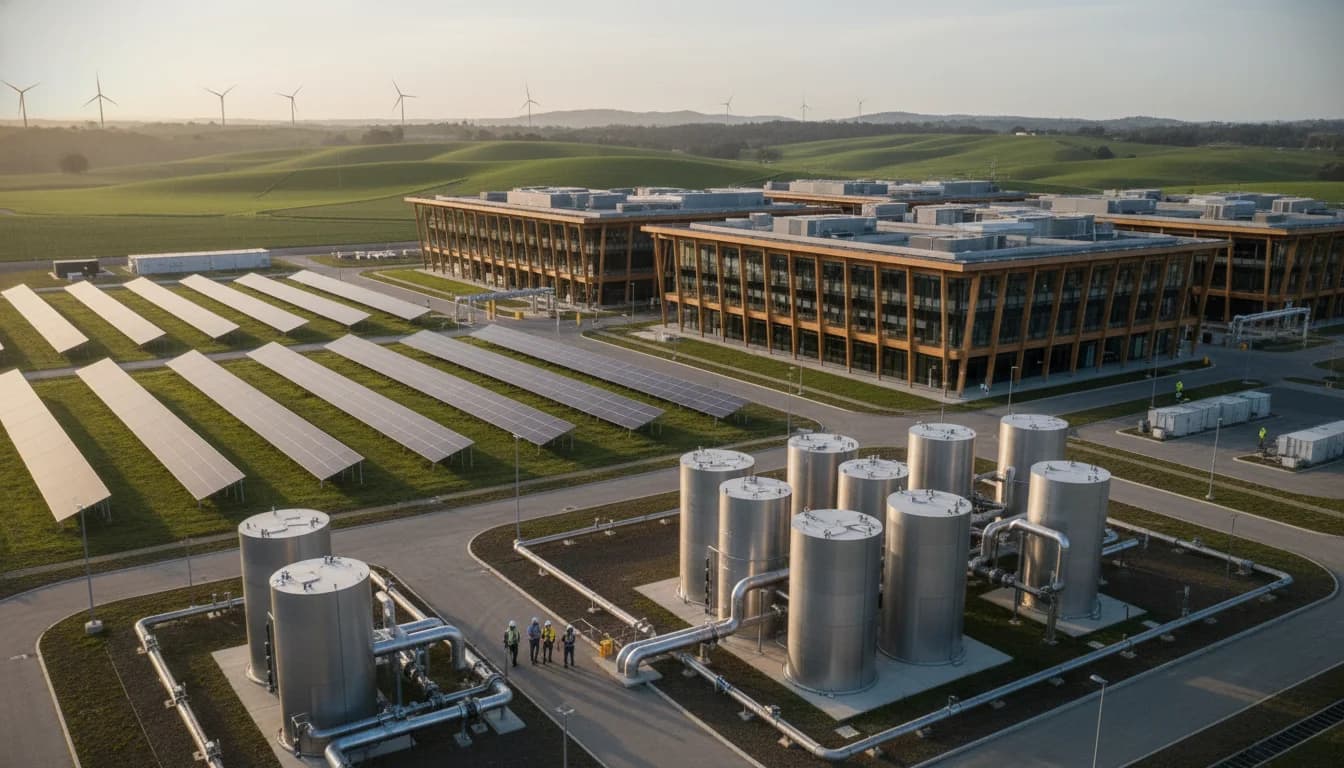
The idea of green hydrogen-powered data centers in Silicon Valley 2026 feels at once thrilling and controversial. On one hand, hydrogen offers a tantalizing path to ultra-low-emission compute, potentially decoupling AI-scale workloads from fossil-fuel grids. On the other hand, the practicalities of cost, supply, reliability, and infrastructure risk remain hotly debated in a region where power constraints and regulatory scrutiny are already shaping the fate of new campuses. This piece argues a clear thesis: by 2026, green hydrogen-powered data centers in Silicon Valley 2026 will be a strategic, niche capability—most valuable as a flexible, on-site, zero-emission backup and grid-support asset, not a universal replacement for grid electricity or a guaranteed path to scale. The broad takeaway is simple but consequential: hydrogen won’t displace the grid for mainstream data-center operations in Silicon Valley any time soon, but it will redefine how high-density AI workloads are deployed in hard-to-electrify environments.
This perspective rests on a data-driven reading of current conditions, pilot programs, cost trajectories, and policy signals. Consider early demonstrations in the Valley—most notably ECL’s MV1 hydrogen-powered data center in Mountain View, which positions hydrogen as a primary power source for a modular, high-density facility. That project, and related supplier efforts in backup and microgrid contexts, illustrate a direction of travel rather than a turnkey, mass-adoption play. As the sector contends with grid constraints, hydrogen is increasingly viewed as a strategic complement—one that can bolster resilience and enable scalable AI at times when electrical infrastructure is under stress. The broader implication for Stanford Tech Review readers is that the industry should measure hydrogen not as a magic bullet, but as a composite tool in a diversified energy and reliability portfolio. This framing matters for executives evaluating where to place bets in 2026 and beyond. In this piece I’ll lay out the current state, why I disagree with the notion that hydrogen alone solves the problem by 2026, and what that means for operators, policymakers, and researchers.
The Current State
Grid constraints and the Silicon Valley energy bottleneck Silicon Valley continues to grapple with a paradox: a concentration of high-tech demand colliding with a grid whose expansion lags behind explosive growth in data-center capacity. A major regional challenge is the pace at which power capacity can be wired to new campuses. CBRE’s North American Data Center Trend Report for Silicon Valley notes that the market expanded modestly in 2025, constrained by power limits and elevated construction costs, with inventory approaching 489 MW and a notable portion under active development facing grid connection delays. The report underscores that as demand for power accelerates, large deployments are progressing in markets with greater energy headroom, hinting at higher costs and longer lead times in the Valley than in other regions. This context helps explain why hydrogen and other alternative power models are attractive as tools for grid-serving, not universal power replacements. (cbre.com)
Two real-world SV data-center pilots illustrate the tension between demand, grid capacity, and innovative power models. First, the Mountain View MV1 project operated by ECL—executed as an off-grid, hydrogen-powered data center—spotlights a path where hydrogen serves as the primary power source for high-density AI workloads while pursuing a water-positive, zero-emission cooling loop. The project’s public briefing describes a modular, built-to-suit approach designed for rapid deployment and tight control over emissions and water use. It demonstrates hydrogen’s potential to unlock capacity in environments where grid connections are slow or constrained and where customers demand predictable, low-emission performance. This is not mass deployment across every campus, but a demonstrable anchor showing what hydrogen can accomplish in a water-constrained, grid-limited setting. (businesswire.com)
Second, industry players are pairing hydrogen with grid-support strategies to address reliability concerns. Vertiv’s Power Module H2 highlights a zero-emission backup power solution built around PEM hydrogen fuel cells, explicitly designed to supplement or replace diesel-based back-up in data centers facing grid capacity or regulatory challenges. This product framing emphasizes resilience and grid-support functions, not wholesale abandonment of the grid for typical operation. The product’s emphasis on rapid startup, direct fuel-cell cooling compatibility, and zero-emissions operation aligns with a use-case profile that is valuable in 2026 but not a default for all facilities. This suggests that the hydrogen approach is most compelling where reliability requirements are high and where permitting and emissions constraints favor on-site, clean power sources. (vertiv.com)
A broader policy and market backdrop informs the current state as well. California’s regulatory and market developments around hydrogen infrastructure—especially the hydrogen fueling network and related investments—provide critical context for any hydrogen-based data-center strategy in Silicon Valley. The California Energy Commission’s 2026 Joint Agency Staff Report on AB 126, updating the hydrogen fueling network status as of 2025, highlights both the progress and the ongoing challenges in hydrogen delivery, storage, and availability. While the report focuses on transportation fuels, it reflects a broader hydrogen ecosystem evolution that data-center developers must track for on-site supply chains, storage, and distribution considerations. The report notes that while statewide fueling capacity exceeds current demand, regional disparities persist, and availability has faced disruptions. This underscores the importance of multi-sourcing, redundancy, and careful siting when considering hydrogen-powered data centers. (energy.ca.gov)
Technologies and cost dynamics underpin the current state as well. Industry literature and government program material emphasize that hydrogen’s cost trajectory remains highly sensitive to electricity prices, electrolyzer technology, capital costs, and utilization rates. DOE and national-lab-based analyses illustrate the broad range of LCOH (levelized cost of hydrogen) projections, with costs varying by technology (PEM vs. alkaline vs. solid-oxide electrolyzers), geography, and renewable energy availability. These cost dynamics matter for data-center deployments because the economics of hydrogen are pivotal to whether hydrogen becomes a central power source for routine operation or remains a strategic backup. The energy-transition literature also stresses that cost reductions depend on mass deployment and learning, which by 2026 is far from uniform across regions. This reality supports viewing green hydrogen-powered data centers in Silicon Valley 2026 as a strategic option with strong caveats rather than a guaranteed trend. (hydrogen.energy.gov)
Technology choices and vendor activity reflect a growing ecosystem. The hydrogen-fuel-cell backup solution market is already seeing offerings from major players like Vertiv, which positions hydrogen-enabled backup power as a viable path to reducing on-site emissions and enabling grid-support participation. The combination of fuel cells with integrated cooling, heat rejection, and energy-management capabilities signals a maturing solution stack for backup and resilience. At the same time, hydrogen-production and storage technologies are benefiting from ongoing R&D and deployment activity across the industrial sector, which informs manufacturing and deployment timelines for data-center-scale hydrogen facilities. These technology and vendor developments are crucial context for evaluating the likelihood of widespread adoption by 2026. (vertiv.com)
What This Means for the Valley’s 2026 landscape The strategic value of green hydrogen-powered data centers in Silicon Valley 2026 lies less in day-to-day electricity provision and more in resilience, flexibility, and site-specific optimization. The current state shows hydrogen as an important tool for niche applications—sites that face grid-connectivity challenges, require near-zero-emissions performance, or must meet ambitious water-use and cooling constraints. The ECL MV1 example demonstrates hydrogen’s potential to support high-density AI workloads in a modular, off-grid format. The Lambda/ECL collaboration underscores hydrogen’s ability to power deployment of advanced GPUs in situations where water-to-cooling and emissions are tightly controlled. Taken together, these signals imply that hydrogen’s real value in Silicon Valley is as a strategic complement, not a universal substitute for grid electricity. This is a nuanced understanding of the current state: hydrogen is being tested and deployed in targeted, high-value use cases that align with grid-constraints and environmental goals. (businesswire.com)
A balanced view also demands acknowledgement of credible counterarguments. Critics reasonably point to the cost and supply uncertainties of green hydrogen, the still-maturing hydrogen supply chain, and the risk that hydrogen-based systems may not scale fast enough to address the region’s broad demand. High-level cost analyses—ranging from LCOH modeling to techno-economic assessments of electrolyzers—underscore that hydrogen economics remain highly location-specific and sensitive to electricity prices, CAPEX, and system utilization. In short, hydrogen can be cost-effective when electricity is cheap, and demand is high and consistent, but the economics are not universally favorable across all Valley deployments. These cost and supply dynamics are well-documented in DOE and NREL analyses and peer-reviewed TEA studies, which show a broad band of possible outcomes rather than a single decisive number. This reinforces the view that hydrogen’s role in Silicon Valley 2026 will be targeted and strategic rather than ubiquitous. (hydrogen.energy.gov)
Why I Disagree
Hydrogen is not a silver bullet for 2026 My central disagreement with universal adoption narratives is simple: hydrogen is not a silver bullet for the year 2026, especially in an urban, grid-constrained technology hub like Silicon Valley. Even with pilots and early deployments, the cost and logistics of green hydrogen production, storage, transport, and on-site use remain nontrivial. Levelized hydrogen-cost studies consistently show a wide range of possible LCOH values depending on electricity prices and electrolyzer technologies, and early market signals indicate that Green Hydrogen economics are highly location- and time-dependent. In practice, a Valley-wide shift to hydrogen as a primary power source for routine data-center operations would require a dramatic and sustained reduction in electrolyzer CAPEX, hydrogen storage costs, and hydrogen-distribution complexity, alongside a commensurate scale-up of renewable electricity. Until those conditions materialize broadly, hydrogen will be most compelling as a strategic backup or as a node in a diversified portfolio of power options rather than a one-size-fits-all replacement for grid power in Silicon Valley 2026. (hydrogen.energy.gov)
Reliability, uptime, and mission-critical concerns A data center’s first obligation is uptime and predictable performance. Hydrogen-based, on-site generation introduces its own reliability considerations: fuel-cell technology, supply-chain continuity for fuel, and the need for robust safety and permitting regimes. While the MV1 project demonstrates hydrogen can operate in a real-world data-center context, the broader question remains: can such systems achieve the same or better reliability at scale without introducing new single points of failure or complex maintenance regimes? The data-center reliability discourse—particularly discussions around rapid load changes and grid interconnections—highlights that reliability is a function of both the grid and the onsite energy architecture. Hydrogen introduces a valuable tool for reliability in certain contexts (e.g., high-density AI workloads, rapid response, and islanded operation), but it does not automatically guarantee higher uptime across all scenarios. In other words, hydrogen-backed deployments will likely co-exist with, rather than replace, conventional grid-sourced power and grid-interactive backup strategies. (utilitydive.com)
Capital costs and market readiness The cost trajectory for green hydrogen is still highly contingent on technology maturation, demand scale, and the broader energy ecosystem. Government program analyses and industry TEA studies point to a wide spectrum of potential LCOH outcomes, dependent on electrolyzer efficiency, electricity pricing, water costs, and utilization factors. While there are encouraging signs of cost reductions with mass deployment, the 2025–2026 literature suggests that meaningful LCOH improvements will require sustained investment and market maturation. Given these dynamics, it would be over-optimistic to assume that green hydrogen-powered data centers in Silicon Valley 2026 will operate at levelized costs equal to conventional grid-powered facilities or to typical back-up-diesel alternatives. Hydrogen’s economic viability will likely reflect a mix of site-specific conditions, regulatory incentives, and corporate risk appetites rather than a universal market-wide price parity. (nature.com)
Policy, permitting, and infrastructure risk Another critical counterpoint centers on policy and infrastructure that are not yet fully aligned with a Valley-wide hydrogen strategy. While California is actively expanding hydrogen infrastructure and setting ambitious decarbonization targets, the state’s 2025–2026 hydrogen-station rollout highlights ongoing reliability concerns, maintenance issues, and regional imbalances. This underlines the risk that hydrogen-based data centers in Silicon Valley 2026 could be hampered by local hydrogen availability or fueling-network constraints, particularly for new builds that must secure continuous supply and environmental permitting. In practice, hydrogen readiness is a long-run play, not a short-term supply guarantee for 2026. The California energy- and transportation-focused planning documents provide a sobering counterpoint to hype, reminding readers that hydrogen is part of a broader energy transition that requires time to mature. (energy.ca.gov)
Evidence-based case-building: where hydrogen shines and where it struggles Taken together, the evidence supports a nuanced stance. Hydrogen is a powerful enabler for certain high-density AI workloads and mission-critical facilities, especially in contexts where grid capacity is limited, emissions targets are stringent, and cooling solutions must be water-efficient. MV1 and related hydrogen-based data-center experiments demonstrate what is possible in a controlled, modular, off-grid or microgrid configuration. However, the same evidence base underscores the risks and limitations: hydrogen’s economics are complex, the supply chain is still developing, and the regulatory environment—while supportive in many ways—adds layers of complexity to deployment timelines. The clearest takeaway is not “hydrogen will overwhelm the Valley by 2026,” but rather “hydrogen will be one of several tools in a diversified energy toolkit for strategic resilience.” (businesswire.com)
What This Means for Silicon Valley 2026
Implications for operators and developers First, hydrogen-based strategies should be framed as hedges against grid constraints and regulatory-imposed emissions limits, not as a blanket solution for all facilities. For developers in Silicon Valley 2026, this means adopting modular, scalable hydrogen assets to address aligned use-cases: high-density AI compute that benefits from near-zero emissions and precise cooling management, plus reliable on-site backup for outages that could otherwise disrupt critical workloads. The risk-mitigation play includes diversified power portfolios that combine hydrogen with renewables, on-site storage, and flexible interconnections to the grid. The ECL MV1 model illustrates the attractiveness of hydrogen when used in conjunction with modular, build-to-suit design and water-saving cooling tech. This is a credible, data-backed path to resilience rather than a universal rule for all facilities. (businesswire.com)
Implications for utilities, regulators, and policymakers Grid operators and regulators face a similar set of questions: how to integrate high-density loads with evolving energy sources, how to maintain reliability, and how to ensure equitable access to zero-emission options. Hydrogen can act as a bridging technology—enabling modular, site-specific decarbonization while grids and transmission become more robust. The 2025–2026 reliability discourse from NERC and industry analysts emphasizes that large data-center growth can stress grids, and that new transmission corridors and interconnection policies will shape where and how hydrogen deployments make sense. Policymakers should view hydrogen as part of a broader toolkit, including microgrids, demand-side management, and accelerated renewable deployment, rather than as a stand-alone antidote to grid constraints. (utilitydive.com)
Implications for research and market development Finally, 2026 is a moment for experiments, pilots, and rigorous TEA-backed decision frameworks. The hydrogen economics literature is now rich enough to support state- and site-specific analyses that compare LCOH under different electricity-price scenarios and electrolyzer technologies. For Silicon Valley, a practical research agenda includes: (1) conducting site-by-site LCOH analyses for prospective hydrogen-powered facilities, (2) evaluating hydrogen delivery and storage logistics in dense urban settings, and (3) tracking policy developments related to hydrogen infrastructure investment and reliability standards. The DOE and NREL-backed TEA studies, alongside industry reports, provide the necessary tools to develop robust, data-driven roadmaps that guide investments and timing. This is how the Valley can responsibly pursue hydrogen-enabled capabilities while avoiding over-optimistic assumptions about rapid, valley-wide adoption by 2026. (hydrogen.energy.gov)
Closing
A clear position for 2026 is that green hydrogen-powered data centers in Silicon Valley 2026 will not replace conventional power in the near term, but will instead function as strategic, lean-on-the-grid assets that boost resilience, enable high-density AI compute in constrained environments, and anchor a broader decarbonization playbook. The evidence from MV1, Lambda/ECL deployments, and industry-reliant cost analyses points to a world where hydrogen enhances, rather than displaces, grid-centric strategies. Operators should pilot and scale hydrogen-bearing architectures where they align with reliability objectives, regulatory requirements, and favorable local energy costs, while continuing to rely on robust grid connections, renewables, and energy storage for the bulk of routine operations.
In the Silicon Valley of 2026, success will belong to those who treat hydrogen as a deliberate, data-informed instrument within a diversified energy portfolio. The most compelling path forward is to design data centers that can seamlessly switch between grid power, hydrogen-backed back-up, and renewables, depending on workload density, uptime needs, and cost signals. That approach offers the best chance to support AI momentum in the Valley without sacrificing reliability or breaking budgetary expectations. As policymakers and industry players continue to collaborate on hydrogen infrastructure, grid upgrades, and emissions targets, the region can position itself as a laboratory for responsible, scalable, hydrogen-enabled compute—without overpromising a revolution in 2026. The onus is on executives, engineers, and regulators to align pilots with rigorous cost-benefit analyses, transparent risk disclosures, and a clear, time-bound plan for broader adoption—if and when the economics and infrastructure converge in Silicon Valley 2026 and beyond.
In short, green hydrogen-powered data centers in Silicon Valley 2026 will be a meaningful, context-specific tool—one that can extend grid resilience, accelerate cooling innovations, and unlock high-density AI compute in carefully chosen sites. The path forward requires disciplined experimentation, cross-sector collaboration, and a willingness to iterate on both technology and policy—treating hydrogen not as a cure-all but as a carefully calibrated capability within a broader energy-transition playbook. The Valley’s 2026 agenda should therefore center on targeted pilots, robust TEAs, and policy facilitation that supports reliable, zero-emission compute where it makes the most strategic sense.